

As a seasoned supplier in the field of CNC machining shafts, I've witnessed firsthand the pivotal role that machine accuracy plays in the production process. In this blog, I'll delve into the profound impact of machine accuracy on CNC machining of shafts, sharing insights based on my extensive experience and industry knowledge.
The Basics of CNC Machining Shafts
Before we explore the influence of machine accuracy, let's briefly understand the CNC machining process for shafts. CNC, or Computer Numerical Control, is a manufacturing process in which pre-programmed computer software dictates the movement of factory tools and machinery. For shaft machining, this involves precision cutting, drilling, and shaping operations to create shafts with specific dimensions and surface finishes. These shafts are widely used in various industries, such as automotive, aerospace, and machinery, where their reliability and performance are crucial.
How Machine Accuracy Affects Dimensional Precision
One of the most significant aspects of CNC machining shafts is achieving the desired dimensional precision. Machine accuracy directly impacts the ability to meet the tight tolerances required for shaft production. Even the slightest deviation from the specified dimensions can lead to functional issues, such as improper fitment in assemblies or reduced performance.
For instance, if the machine has poor positioning accuracy, it may cut the shaft slightly larger or smaller than the intended size. This can cause problems during assembly, as the shaft may not fit correctly into bearings or other mating components. In high-precision applications, such as aerospace engines, a dimensional error of just a few microns can have catastrophic consequences. Therefore, a highly accurate machine is essential to ensure that each shaft is machined to the exact specifications.
Impact on Surface Finish
In addition to dimensional precision, machine accuracy also affects the surface finish of the shafts. A smooth surface finish is crucial for reducing friction, wear, and noise in rotating applications. An inaccurate machine may produce a rough or uneven surface, which can lead to premature failure of the shaft or its associated components.
The cutting tools used in CNC machining are controlled by the machine's movement. If the machine has vibrations or inaccuracies in its motion control, the cutting tools may chatter or produce irregular cuts. This results in a poor surface finish, with visible tool marks or roughness. On the other hand, a precise machine can maintain a consistent cutting path, ensuring a smooth and uniform surface finish on the shaft.
Influence on Geometric Tolerance
Geometric tolerance refers to the allowable variation in the shape and orientation of a part. In the case of shafts, geometric tolerance includes parameters such as straightness, roundness, and cylindricity. Machine accuracy plays a vital role in achieving these geometric tolerances.
For example, to ensure the straightness of a shaft, the machine must be able to move the cutting tool in a perfectly straight line. Any inaccuracies in the machine's linear motion can result in a bent or bowed shaft. Similarly, for achieving roundness and cylindricity, the machine needs to rotate the workpiece with high precision. A machine with poor rotational accuracy may produce shafts that are out of round or have inconsistent diameters along their length.
Cost Implications of Machine Accuracy
While investing in high-accuracy CNC machines may involve a higher upfront cost, it can lead to significant savings in the long run. A more accurate machine reduces the likelihood of producing defective parts, which in turn minimizes scrap rates and rework. This not only saves on material costs but also reduces production time and labor costs associated with handling and correcting defective parts.
Moreover, high-quality shafts produced with accurate machines are more likely to meet customer requirements and specifications. This can enhance customer satisfaction and lead to repeat business and positive word-of-mouth referrals. In the competitive market of CNC machining shafts, having a reputation for producing high-precision parts can give a supplier a significant edge.
Ensuring Machine Accuracy
To maintain the accuracy of CNC machines used for shaft machining, regular maintenance and calibration are essential. Machine calibration is the process of adjusting the machine to ensure that its movements and measurements are accurate. This should be done at regular intervals, as specified by the machine manufacturer.
In addition to calibration, proper tool management is also crucial. Worn or damaged cutting tools can affect the accuracy of the machining process. Therefore, it's important to regularly inspect and replace cutting tools to ensure optimal performance.

Conclusion
In conclusion, machine accuracy is of utmost importance in CNC machining of shafts. It directly impacts dimensional precision, surface finish, geometric tolerance, and cost-effectiveness. As a [mention supplier's self - description, e.g., reliable supplier] of CNC machining shafts, we understand the critical role that machine accuracy plays in delivering high-quality products to our customers. We are committed to investing in the latest and most accurate CNC machines, as well as maintaining and calibrating them regularly to ensure the best possible results.
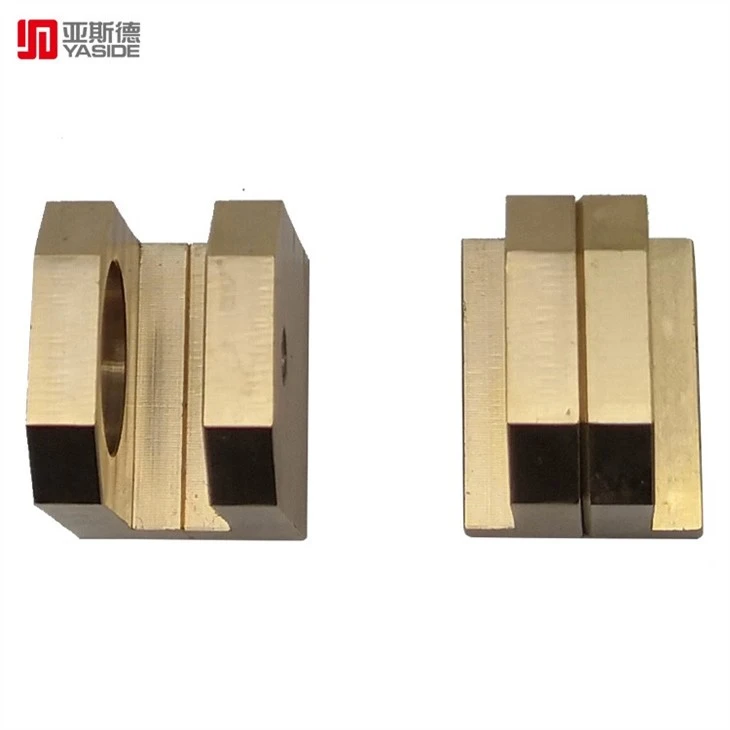
If you are looking for high-precision CNC machining shafts, or if you are interested in CNC Machining Flange, CNC Machining Copper Parts or CNC Machining Flange, please feel free to contact us for a discussion. We are here to provide you with the best solutions tailored to your specific needs.
References
- M. P. Groover, "Fundamentals of Modern Manufacturing: Materials, Processes, and Systems", Wiley, 2019.
- A. J. Shih, "CNC Machining Handbook", Industrial Press, 2016.
- T. DeGarmo, "Materials and Processes in Manufacturing", Pearson, 2018.


