


CNC Machining Parts
What is CNC Machining Parts?
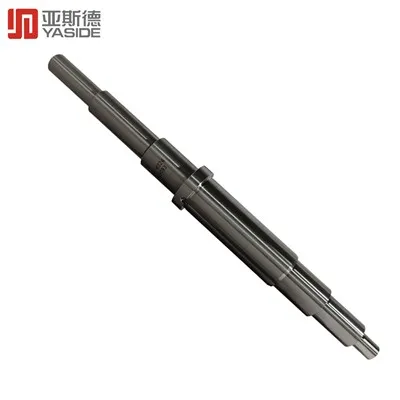
CNC machining parts refer to the process of using computer-aided design (CAD) software to design and manufacture precise parts and components from various materials such as metal, plastic, wood, and ceramic. CNC machining involves using computer numerical control (CNC) machines that are programmed using software to perform highly accurate cutting, drilling, milling, and shaping of parts. CNC machined parts have a very high degree of accuracy, uniformity, and consistency, making them ideal for a wide range of industries including aerospace, automotive, medical, and industrial manufacturing.
Why Choose Us?
Dongguan Yasid Precision Machinery Co., Ltd. (formerly Dongguan Jiya Machinery Equipment Co., Ltd.) is a production factory located in Dalingshan Town, Dongguan City, Guangdong Province. The company has more than 80 employees and a building area of 10,000 square meters. Founded in 1995, the company is mainly engaged in the processing of large and precision industrial equipment parts. After 26 years of accumulation and precipitation, our company currently has more than 50 sets of various production equipment [5 sets of CNC horizontal machining centers, 10 sets of CNC vertical machining centers (three-axis, four-axis), 10 sets of CNC lathes, large Surface water mill, internal and external circular mill, gantry milling machine] and complete inspection equipment (altimeter, hardness tester, two-dimensional, three-dimensional, projector, etc.).
Quality assurance
Have more than 30 senior engineers and technicians with more than ten years' working experience in the mechanical industry.
Good service
Our main concern is to provide quality customer service.
Reasonable price
Our products with reasonable price and stable quality popular.
Fast delivery
At competitive prices is our management purpose, fast delivery is our character.




Benefits of CNC Machining Parts
CNC machining generates minimal to no waste: CNC machining is not only efficient, but it can also minimize material wastage thanks to its precision and accuracy. As long as the part is designed properly in the computer, the machine itself will almost never make faulty cuts, so there will be fewer damaged parts to discard. The machine can handle precise cuts and angles without generating much waste.
CNC machining is more accurate and has no defects: One of the major CNC machining benefits is accuracy. Because CNC machines receive precise instructions from a computer — and the movements are similarly carried out under computer control — their results will be identical each time and will match the computer model closely. This is a huge advantage when it comes to creating parts with tight tolerances. This capability almost entirely eliminates human error from the equation.
CNC machining offers more rapid and effective production: Another industry-cornering CNC machining benefit is the inherent speed and efficiency of production. CNC machines are capable of producing products much more quickly and efficiently than traditional methods. Many modern units can even load the billet and unload the completed product without human intervention. Naturally, this capability leads to significant cost savings and increased productivity. In addition, this sort of automation makes parts more consistent.
CNC machining makes assembly faster: Products whose components are created under computer numerical control are simpler to assemble. Because CNC machining is so precise and consistent, companion parts will fit together exactly as they do on the computer. And since the process is quicker than manual machining, you’ll spend less time waiting for parts to be completed. Unless there is a problem in the computer model, all parts should fit together perfectly. This capability can save a lot of time and money in the assembly process, as there is no need for extensive fitting and adjustment.
CNC machining separates machines from people and reduces the risk that would otherwise arise: CNC machining removes significant safety risks from the shop floor. By automating the machining process, you can eliminate many of the hazards associated with manual machining. In addition, CNC machines are typically enclosed, which further reduces the risk of injury.
CNC machining uses little energy: CNC machining uses less electricity than older processes, thereby reducing energy consumption. In fact, according to the EPA, CNC machining uses about one-seventh of the energy of traditional machining methods. There are multiple reasons; CNC machines not only work quickly but draw less power per minute than most other manufacturing methods.
CNC machining reduces production costs: CNC machining is an economical, efficient, and precise process of manufacturing parts and products. CNC machining also uses fewer raw materials in comparison to conventional machining. Focusing your shop around CNC technology will drastically reduce errors, production expenditures, and product costs.
Types of CNC Machining Parts
Milling parts
These parts are made by removing material from a solid block of metal using a drill or milling machine.
01
Drilling parts
These are parts that have been machined using a drill, which creates holes in the metal.
02
Sheet metal parts
These are parts that have been formed and shaped into specific shapes using a metal press.
03
Waterjet cutting parts
These are parts that have been cut using a high-pressure water jet that is used to create intricate shapes in the metal.
04
Turning parts
These are typically cylindrical parts that have been machined on a lathe. They are often used for fittings, connectors, and other parts that require a smooth finish.
05
Grinding parts
These parts are made by grinding the metal surface using a grinding machine. This technique is used to create intricate shapes and designs.
06
Wire EDM parts
These parts are created using electrical discharge machining, which uses a wire electrode to cut the metal into the desired shape.
07
Laser cutting parts
These parts are made using a laser cutting machine, which can cut through a range of materials, including metal and plastic.
08
Material of CNC Machining Parts

There are various materials that can be used for CNC machining parts, including:
1.Aluminum
It is a popular material choice for CNC machining due to its lightweight, high strength and corrosion resistance properties. It can also be anodized easily.
2.Stainless steel
It is a popular material choice for CNC machining due to its strength, durability and low maintenance requirements.
3.Brass
It is a popular material choice for CNC machining due to its good electrical and thermal conductivity properties.
4.Copper
It is a popular material choice for CNC machining due to its good electrical and thermal conductivity properties.
5.Titanium
It is a popular material choice for CNC machining due to its high strength-to-weight ratio, corrosion resistance and biocompatibility.
6.Plastics
Different types of plastics such as ABS, polycarbonate, nylon, acrylic, POM, etc. are used for CNC machining because of their lightweight, versatility and durability.
7.Carbon fiber
It is a popular material choice for CNC machining due to its exceptional strength-to-weight ratio, high stiffness and corrosion resistance.
How to Maintain CNC Machining Parts?
1.Regular cleaning
Regularly clean the CNC machining parts using a soft cloth or brush. Use a mild cleaning solution and avoid abrasive materials. This will help in removing any debris or dust that may be present on the parts, which can affect the accuracy and quality of the machining.
2.Lubrication
Lubricate the CNC machining parts regularly to prevent wear and tear. Use the recommended lubricant for the particular type of machining part. Over or under-lubricating can lead to damage or failure of the part.
3.Inspection and maintenance
Regularly inspect the CNC machining parts for any signs of wear and tear, cracks, or damage. If any damage is found, schedule maintenance repairs or replacements immediately. Neglecting to repair damaged parts can lead to a decrease in accuracy and quality of the machining and also impact the efficiency of the machine.
4.Proper storage
Store the CNC machining parts in a clean, dry, and protected environment to avoid any damage or rusting. Make sure to keep compatible parts together and label them properly to avoid confusion during assembly.

Process of CNC Machining Parts
CNC machining is a process used to create custom-designed parts by using computer-controlled machines. The machines use a series of tools to shape and cut parts from multiple materials. The process of CNC machining parts involves several steps as outlined below:
The first step in the CNC machining process is to create a 3D model of the part that needs to be machined. This is done using CAD (Computer-Aided Design) software.
After designing the part, you need to program the CNC machine using CAM software. It involves converting the 3D CAD model into a series of instructions that the CNC machine can understand. The instructions will include the necessary parameters for the machine to follow, such as speed, cutting depth, and toolpath.
Once the CNC program is ready, you need to select the material you will use. You can choose from a wide range of materials depending on the nature and use of the part you require. Some of the common materials used in CNC machining include aluminum, brass, steel, plastic, and titanium.
The next step is to set up the CNC machine and design a fixture to hold the workpiece in place. The fixture is important to ensure that the part remains stable during the machining process. It helps to prevent unwanted movement of the material that could lead to errors or damage to the part.
The actual machining process starts once you have loaded the material and fixture into the CNC machine. The machine will then move the cutting tools along the programmed toolpath while removing material from the workpiece. The process continues until the machine has completed the cutting process, drilling, milling, and any other required operations.
After machining is complete, the part undergoes a detailed quality inspection to ensure that it meets the required tolerance and specification. The inspection process may include the use of a coordinate measuring machine (CMM) or other measurement tools.
The final step involves finishing the part, which may involve sanding, deburring, or polishing. It helps to provide better surface finish and enhance the overall look and function of the part.
The process of CNC machining parts is complex and requires a high level of precision and expertise. The use of advanced software and machines ensures that the parts produced are accurate, reliable, and meet the desired specifications.
What is the Importance of CNC Machining Parts?
CNC machining parts is critical in today’s industrial environment for its ability to produce accurate, repeatable, and affordable products. The method enables items that would be impossible or prohibitively expensive to fabricate using other manufacturing techniques. For example, CNC machining parts is one of the finest ways to guarantee perfectly constructed telecommunications equipment such as: heat sinks, microwave tower parts, and amplifier housings. The method enables the precise design and manufacture of intricate mechanical parts while taking into consideration technical specifications, component dimensions, and geometry.
Application of CNC Machining Parts

1.Automotive industries
In the automotive industry, CNC machines parts that require tight tolerances and exact specifications, such as engine blocks, transmission housings, and suspension components. CNC machines can also create custom parts unique to a particular vehicle model.
2.Aerospace industries
CNC machines parts, spacecraft, and satellite parts in the aerospace industry. These parts must be lightweight, durable, and withstand extreme conditions. CNC machines can create complex shapes and contours that cannot be achieved with traditional machining methods.
3.Medical industry
CNC machines parts surgical instruments, prosthetics, and implants in the medical industry. These parts must be precise and reliable to ensure patient safety. CNC machines can have parts with intricate designs and tight tolerances essential in medical applications.
4.Electronics industry
CNC machines parts is an indispensable technology in the electronics industry, used to produce a wide range of electronic components and devices with high precision and accuracy. It is used for cutting and drilling printed circuit boards, shaping enclosures and connectors, producing heat sinks, creating electronic components, and prototyping.
5.Optical communication industry
CNC machines parts is used in the optical communication industry to create precise components such as fiber optic connectors, ferrules, optical filters, and couplers. These components are critical for the efficient transmission of data through optical fibers.
6.Military and defense industry
CNC machines parts is widely used in the defense industry for producing high-precision components for aerospace systems, weapon systems, armor, vehicle components, and communication and electronics equipment. It is critical for ensuring the reliability and performance of these systems.
7.Oil and gas industry
CNC machines parts is used extensively in the Oil and Gas industry for various applications, including manufacturing components for drilling equipment, valves, pumps, and pipelines. It's also used in the fabrication of offshore structures and the repair and refurbishment of equipment. CNC machining ensures high precision and reliability of critical components in harsh environments.
8.Energy industry
In the energy industry, CNC machines parts intricate parts for various applications such as turbines, oil and gas drilling equipment, nuclear power plant components, and solar panel frames. The process guarantees high precision, accuracy, durability, and resistance to wear and tear.
Components of CNC Machining Parts
1.Machine
The CNC machine is the core component that performs the actual cutting, drilling, and milling operations.
2.Cutting tools
The cutting tools are used to cut, drill, or mill the material being machined. These tools are often made from carbide, ceramic, or high-speed steel.
3.Work holding devices
Work holding devices are used to hold the material being machined in place on the CNC machine bed. These devices can include clamps, vises, chucks, and fixtures.
4.Tool holders
Tool holders are used to hold the cutting tools in the CNC machine. These holders can be collets, end mill holders, or other specialized holders.
5.Tool path
The tool path is the path that the cutting tool follows during the machining process. This path is programmed into the CNC machine and determines the final shape of the machined part.
6.Control unit
The control unit is the brain of the CNC machine. It receives instructions from the operator, converts those instructions into machine commands, and regulates the speed and direction of the cutting tool.
7.Cooling system
The cooling system is used to keep the cutting tool and workpiece cool during the machining process. This is important to prevent damage to the tool and workpiece and ensure accuracy.
8.Software
CNC machining requires specialized software to program the machine and create the tool path. This software is typically CAD/CAM software which is used to design and model the part and plan the machining operations.

My Factory
We have large-scale, high-precision trump card equipment, advanced testing equipment, and professional quality inspectors to ensure that the quality of each process is effectively controlled, and the product accuracy can reach ±0.005mm. We have more than 30 senior engineers and senior technicians with more than ten years of working experience in the machinery industry. We adhere to the business philosophy of high quality, high precision, on-time delivery and strict confidentiality of customer information, and introduce lean production management and systematic data management. We will definitely become your ideal partner.


Our Certificate

FAQ

01.What is CNC machining?
02.What materials can be CNC machined?
03.What is the difference between CNC milling and CNC turning?
04.What is the maximum size of parts that can be CNC machined?
05.How accurate are CNC machined parts?
06.What software is used to create CNC machining programs?
07.What is the lead time for CNC machining parts?
08.Can CNC machining produce parts with multiple geometries?
09.What are the benefits of CNC machining?
10.What industries rely on CNC machining?
11.What types of materials can be used in CNC machining?
12.What types of products can be produced through CNC machining?
13.What is the lead time for CNC machining parts?
14.Can CNC machining be used for both prototyping and production runs?
15.Are there any limitations to CNC machining?
16.Is it possible to customize CNC machining parts?
17.How important is quality control in CNC machining?
18.What is the price range for CNC machining services?
19.What are the advantages of CNC machining?
- High accuracy and precision
- Ability to work with a range of materials
- Quality consistency and repeatability
- Cost-effectiveness for large-scale production
- Reduced lead times
20.What are the most commonly used CNC machining processes?