

Hey there! As a supplier of CNC stainless steel products, I've dealt with countless challenges in the machining process. One of the most critical factors that can make or break a project is surface roughness. In this blog, I'll share some tips on how to control the surface roughness in CNC stainless steel machining.
Understanding Surface Roughness
First off, let's talk about what surface roughness is. It's basically the irregularities on the surface of a machined part. These irregularities can affect the part's functionality, appearance, and even its lifespan. In CNC stainless steel machining, achieving the right surface roughness is crucial for a high - quality end - product.
Factors Affecting Surface Roughness
There are several factors that can influence the surface roughness in CNC stainless steel machining.
Tool Selection
The tool you choose plays a huge role. For stainless steel, carbide tools are often a great choice. They are hard and can withstand the high cutting forces and heat generated during machining. A sharp tool will cut through the stainless steel more cleanly, resulting in a smoother surface. Dull tools, on the other hand, can cause tearing and uneven cutting, leading to a rougher surface.
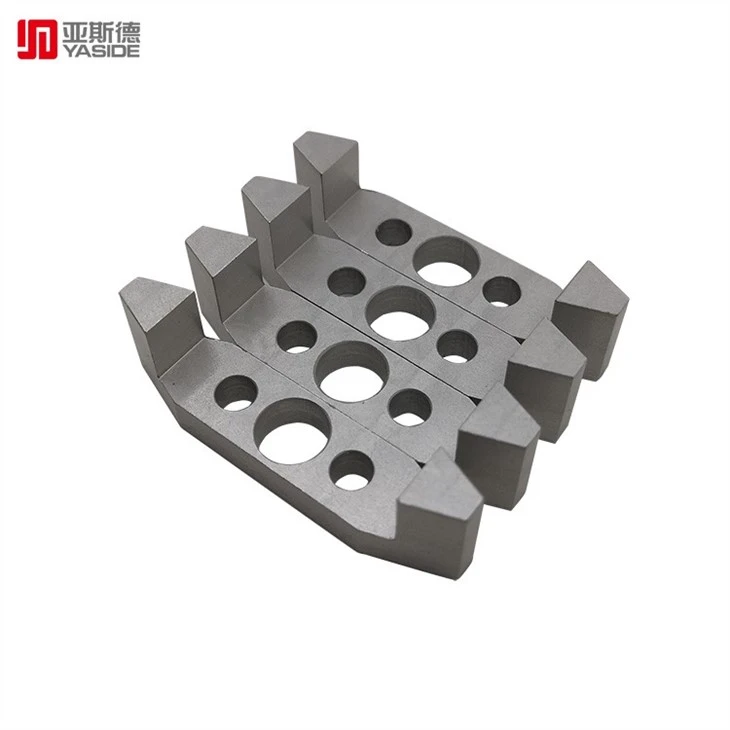

When you're selecting a tool, also consider its geometry. Tools with proper rake and clearance angles can reduce the cutting forces and improve the surface finish. For example, a positive rake angle can make the cutting process easier and result in a better surface. You can check out our CNC Processing 6061 Aluminum Parts page to see some of the tools and machining processes we use, which can give you an idea of how tool selection impacts the final product.
Cutting Parameters
Cutting parameters such as cutting speed, feed rate, and depth of cut are also vital.
- Cutting Speed: A higher cutting speed generally leads to a better surface finish, but only up to a certain point. If the cutting speed is too high, it can cause excessive heat, which may result in tool wear and a poor surface finish. You need to find the optimal cutting speed for the specific grade of stainless steel you're working with.
- Feed Rate: The feed rate is the speed at which the tool moves along the workpiece. A lower feed rate usually gives a smoother surface because the tool has more time to make a clean cut. However, a very low feed rate can be time - consuming and may not be cost - effective.
- Depth of Cut: The depth of cut refers to how much material is removed in each pass of the tool. A smaller depth of cut can result in a better surface finish, but you may need more passes to remove the required amount of material.
Coolant and Lubrication
Stainless steel generates a lot of heat during machining. Using a coolant or lubricant is essential to control the temperature and reduce friction. Coolants can also help to flush away chips from the cutting area, preventing them from scratching the surface of the workpiece.
There are different types of coolants available, such as water - based and oil - based coolants. Water - based coolants are more environmentally friendly and are good at cooling, while oil - based coolants provide better lubrication. You need to choose the right coolant based on your specific machining requirements.
Techniques to Control Surface Roughness
Finishing Passes
After the rough machining is done, a finishing pass can significantly improve the surface roughness. During the finishing pass, use a lower feed rate and a smaller depth of cut. This allows the tool to remove a very thin layer of material and create a smoother surface.
Tool Path Optimization
The tool path can also affect the surface roughness. Using a continuous and smooth tool path can reduce the chances of tool marks on the surface. Avoid sudden changes in direction or overlapping tool paths, as these can cause uneven surfaces.
Quality Control
Regularly inspect the surface roughness during the machining process. You can use a surface roughness tester to measure the roughness and make adjustments to the cutting parameters or tool selection if necessary. This way, you can catch any issues early and ensure that the final product meets the required surface roughness standards.
Case Studies
Let me share a couple of case studies to illustrate how these techniques work in real - world scenarios.
We had a client who needed a CNC Motor Shaft made of stainless steel with a very smooth surface finish. Initially, the surface roughness was higher than the client's requirements. We analyzed the process and found that the tool was starting to get dull. We replaced the tool with a new carbide one and adjusted the cutting parameters. We also added a finishing pass with a lower feed rate. After these changes, the surface roughness improved significantly, and the client was very satisfied with the final product.
Another time, we were working on CNC Drilling Components Machining for a customer. The surface roughness was uneven in some areas. We realized that the coolant was not being applied effectively in those areas. We adjusted the coolant nozzles to ensure better coverage and also optimized the tool path. This led to a more consistent surface roughness across the entire component.
Conclusion
Controlling surface roughness in CNC stainless steel machining is a complex but achievable task. By carefully selecting the right tools, optimizing the cutting parameters, using proper coolant and lubrication, and applying finishing passes and quality control measures, you can achieve the desired surface finish.
If you're in the market for high - quality CNC stainless steel products and want to ensure the best surface roughness for your projects, don't hesitate to reach out for a procurement discussion. We're here to help you get the best results for your machining needs.
References
- "Modern Machining Technology" by John A. Schey
- "CNC Machining Handbook" by Mark Albert


