

Creep resistance is a critical property when it comes to CNC stainless steel parts, especially in applications where these parts are subjected to constant stress and high temperatures over extended periods. As a supplier of CNC stainless steel parts, understanding and providing parts with excellent creep resistance is essential to meet the diverse needs of our customers.
What is Creep?
Creep is a time - dependent deformation that occurs in materials when they are exposed to a constant load or stress at elevated temperatures. Unlike elastic deformation, which is reversible when the load is removed, creep deformation is permanent. It typically occurs in three stages: primary creep, secondary creep, and tertiary creep.
In the primary creep stage, the deformation rate is relatively high at the beginning and then gradually decreases. This is because the material undergoes initial internal adjustments to the applied stress. The secondary creep stage is characterized by a constant deformation rate, which is often the most important stage for practical applications. During this stage, the material reaches a balance between the work - hardening and recovery processes. The tertiary creep stage is marked by an accelerating deformation rate, which eventually leads to failure of the material.
Factors Affecting Creep Resistance of CNC Stainless Steel Parts
1. Chemical Composition
The chemical composition of stainless steel plays a crucial role in determining its creep resistance. For example, elements such as chromium (Cr), nickel (Ni), and molybdenum (Mo) are commonly added to stainless steel. Chromium forms a passive oxide layer on the surface of the steel, which provides corrosion resistance and also contributes to high - temperature stability. Nickel enhances the ductility and toughness of the steel, as well as its resistance to oxidation and creep at elevated temperatures. Molybdenum improves the strength and creep resistance of stainless steel, especially in high - temperature and high - stress environments.
2. Grain Structure
The grain structure of stainless steel also affects its creep resistance. Fine - grained stainless steel generally has better creep resistance at lower temperatures because the grain boundaries act as barriers to dislocation movement. However, at higher temperatures, coarse - grained stainless steel may have better creep resistance. This is because the grain boundaries become more mobile at high temperatures, and a coarse - grained structure reduces the total area of grain boundaries, minimizing the contribution of grain - boundary sliding to creep deformation.
3. Heat Treatment
Heat treatment processes such as annealing, quenching, and tempering can significantly influence the creep resistance of CNC stainless steel parts. Annealing can relieve internal stresses and refine the grain structure, improving the material's overall stability and creep resistance. Quenching and tempering can adjust the hardness and strength of the steel, which in turn affects its creep behavior. For example, proper quenching and tempering can produce a fine - grained martensitic structure with high strength and good creep resistance.

Importance of Creep Resistance in CNC Stainless Steel Parts
1. Aerospace Applications
In the aerospace industry, CNC stainless steel parts are used in various components such as engine parts, landing gear, and structural elements. These parts are often exposed to high temperatures and constant stress during flight. For example, turbine blades in aircraft engines operate at extremely high temperatures and are subjected to centrifugal forces. High creep resistance is essential to ensure the long - term reliability and safety of these components. A failure due to creep can lead to catastrophic consequences, including engine malfunction and aircraft crashes.
2. Power Generation
In power generation plants, whether they are fossil - fuel - fired, nuclear, or solar thermal plants, CNC stainless steel parts are used in critical components such as boilers, steam turbines, and heat exchangers. These parts are exposed to high - temperature steam and constant pressure for long periods. Creep resistance is vital to prevent deformation and failure of these components, which could lead to power outages and costly repairs.

3. Chemical Processing
In the chemical processing industry, CNC stainless steel parts are used in reactors, pipelines, and valves. These parts are often in contact with corrosive chemicals at high temperatures and pressures. Creep resistance, combined with corrosion resistance, is necessary to ensure the integrity of the equipment and prevent leaks and chemical spills, which can have serious environmental and safety implications.
Our Capabilities as a CNC Stainless Steel Parts Supplier
As a supplier of CNC stainless steel parts, we have the expertise and resources to produce parts with excellent creep resistance. We start by carefully selecting the appropriate stainless steel grades based on the specific application requirements. Our team of engineers conducts detailed material analysis and testing to ensure that the chemical composition and mechanical properties of the steel meet the standards for high - creep resistance.
We use state - of - the - art CNC machining technology to manufacture parts with high precision and quality. Our CNC machines are capable of producing complex geometries while maintaining tight tolerances. During the machining process, we pay close attention to factors such as cutting speed, feed rate, and tool selection to minimize the introduction of internal stresses that could affect the creep resistance of the parts.
In addition to machining, we offer a range of heat treatment services to optimize the creep resistance of our CNC stainless steel parts. Our heat treatment facilities are equipped with advanced temperature control systems to ensure accurate and consistent heat treatment processes. We also perform non - destructive testing and mechanical testing on the finished parts to verify their quality and creep resistance.
Related Products
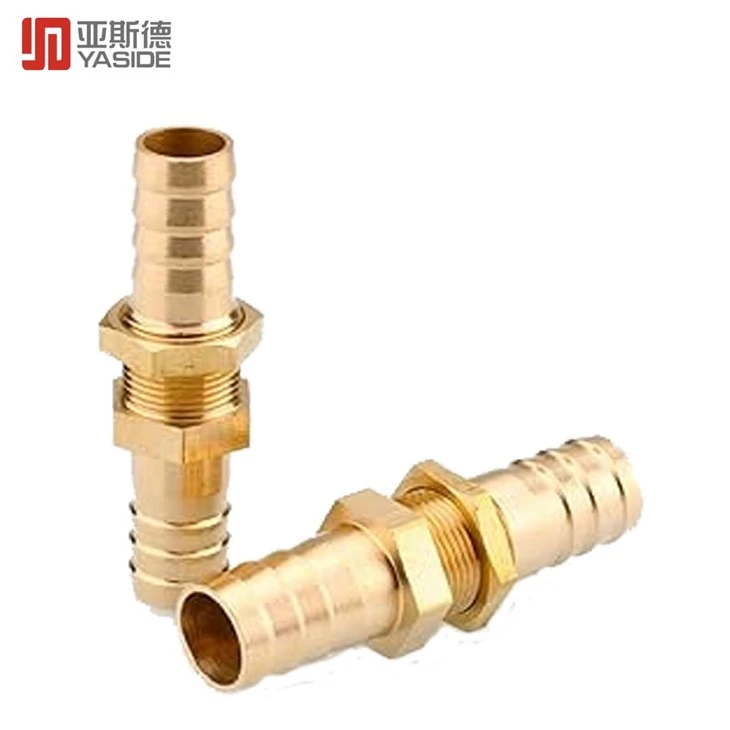
We also offer a variety of other CNC machining parts, such as CNC Machining Brass Bulkhead Pipe Fitting, CNC Brass Electrical Component Parts, and CNC Machining Copper Parts. These parts are manufactured with the same high - quality standards and precision as our CNC stainless steel parts.
Contact Us for Your CNC Machining Needs
If you are in need of high - quality CNC stainless steel parts with excellent creep resistance, or any of our other CNC machining products, we encourage you to contact us. Our team of experts is ready to assist you in selecting the right materials and designs for your specific applications. We can provide customized solutions to meet your unique requirements. Whether you are in the aerospace, power generation, chemical processing, or any other industry, we have the capabilities to deliver reliable and cost - effective CNC machining parts.
References
- Callister, W. D., & Rethwisch, D. G. (2017). Materials Science and Engineering: An Introduction. Wiley.
- ASM Handbook Committee. (1997). ASM Handbook Volume 1: Properties and Selection: Irons, Steels, and High - Performance Alloys. ASM International.
- Kutz, M. (2013). Mechanical Engineers' Handbook: Materials, Processes, and Design. Wiley.


