


CNC Motorcycle Cylinder Head Processing Parts
Products Description
CNC Motorcycle Cylinder Head Processing Parts
The engine of a vehicle (motorcycle) is the most crucial part. Some refer to it as the heart of the vehicle. However, the camshaft, cylinder head, and pistons tend to be complicated and call for high-precision designs. CNC turning is the go-to technique in designing the engine parts of motorcycles.

Cylinder Head
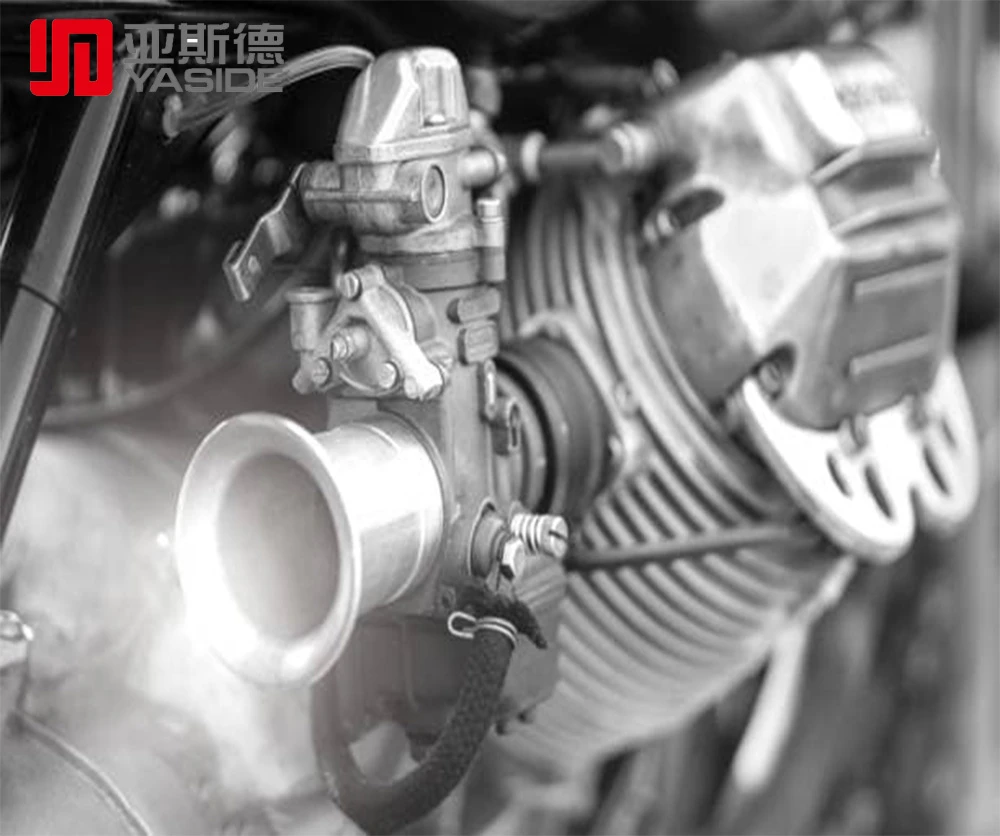
The cylinder head is often made of aluminum, and it controls fuel combustion by regulating the mixture of fuel with air. Moreover, the mixture passes through a combustion chamber at a specific angle. More acute angles lead to greater fuel combustion, which results in increased propulsion of the motorcycle. Let’s not bore you out with the mechanics. The cylinder head is an essential part of the motorcycle. The valves that aid in regulating the fuel intake in the cylinder head are products of CNC machining.
Materials Used for Custom Motorcycle Parts
Aluminum and steel alloys are the common metals for fabricating most custom CNC motorcycle parts, with each having advantages over the other. However, brass and copper motorcycle parts also exist amongst other materials used. Below are some of the metals used in machining motorcycle parts.
Aluminum
Aluminum and its alloys remain the most used material in CNC machining due to their easy machinability. It is a highly versatile metal and generally easy to work with. Its lightweight yet high strength makes it the go-to metal for machining motorcycle parts.
Manufacturers that deal in the manufacture of custom motorcycle parts use aluminum to manufacture most parts. In the past, we designed engines using cast iron. However, there is now a switch to aluminum, primarily because of its lightweight. They are also effective in designing wheels.
Zinc
Zinc is another relatively light metal with a good mechanical strength that gives it excellent machining properties. This material is highly malleable and has good dimensional stability. They are good enough even for critical components that call for high precision. Therefore, they are suitable for the manufacture of engine parts for motorcycles.
Magnesium
Magnesium is another metal highly used in fabricating CNC custom parts. It is one of the lightest metals available yet with nice machinability properties and strength to suit its lightweight. One of the shortcomings of magnesium is that its dust is highly flammable. Therefore, working with magnesium requires excellent care.
Stainless Steel
Stainless steel has excellent machinability and welding properties, making it an ideal alloy for CNC operations. Also, they have a high aesthetic appeal and high corrosion resistance. Their use in fabricating many motorcycle parts includes mostly fixtures – screws and bolts. Their high resistance to rusting is a critical reason for this use.
Machining Processes for Motorcycle Parts
There are various machining processes used in industries to fabricate various motorcycle parts. CNC turning and milling appear to be the basics. Although, there are other methods like drilling. Let’s take a detailed look into some of these machining processes.
CNC Turning
CNC turning is a subtractive manufacturing process. Moreover, it involves holding bars of material – plastic or metal mostly, in place, and upon rotation (turning), a cutting tool removes parts of the material to reach the desired shape. This technique is used when fabricating the engine parts of motorcycles, such as pistons, camshafts, and cylinder heads. These engine parts are critical components that require accuracy and precision.
CNC Milling
Milling operations involve rotating cutters moving at great speed. They shape out materials to the shape or form coded into the machine. However, like turning, it is a subtractive process that utilizes various tools to reduce materials, usually plastics or metals. CNC milling is often employed when customizing motorcycle wheels. When dealing with asymmetrical products, milling is the go-to process to ensure the proper design of curves with the necessary precision.
Several Methods Of Aluminum Alloy Surface Treatment
·Anodic oxidation process: Anode treatment is the use of direct current, AC direct current electrolysis principle, in the workpiece or product surface to form a layer of oxide film, to increase corrosion resistance and aesthetic method.
·Electroplating process: The electroplating process, is the workpiece as a cathode, and the formation of coating material as an anode, both are placed in the bath tank and then through the DC or AC-DC, so that the formation of coating material ionization and from the plating solution to run to the workpiece surface, firmly attached to the formation of different thickness coating method.
·Infiltration treatment: First remove oil stains on castings or products with oil remover, and then rinse them with warm water at 25-30℃ for insulation.
·Then put it into the infiltrator and seal it, vacuum it to 0.7-0.8mpa, keep the temperature at about 65℃, and then inject the prepared infiltrator into the infiltrator. After soaking for 8-10h, the dried compressed air is passed in to keep the pressure at about 0.4mpa, and then it is kept for 8-10h. Finally, the casting or products are taken out for air drying.
·Surface spraying: Spraying paint on cast aluminum or aluminum alloy component to improve their corrosion resistance.For castings or products that require good corrosion resistance, which should be anodized or chemically oxidized before spraying.
·The purpose is to increase the corrosion resistance of its own and to make the paint bond more firmly, and then brush primer and finish the paint.
·Blast working process: The aluminum alloy castings are loaded into the drum of the high-pressure blasting machine and sprayed onto the surface of the castings by the bullet stream running at high speed. As the casting is constantly turning at the same time, all its surfaces are strengthened by the injection of projectiles.
·Vacuum spray plating: Put the product or profile to be sprayed into the vacuum chamber of the spraying machine as the cathode, and take the material of the spray layer forming as the anode.
·After closing the vacuum chamber, vacuum to a certain vacuum degree, with a high-power plasma gun to spray material in ion state sputtering and deposition as a cathode product or profile, forming a layer of 2-10um spray layer, showing a variety of bright luster.
Q: What is a cylinder head?
Q: Why is the cylinder head so important?
Q: What are the materials of the cylinder head?
Q: Does the cylinder head need to be replaced regularly?
Q: How to choose the right cylinder head?
Hot Tags: cnc motorcycle cylinder head processing parts, China cnc motorcycle cylinder head processing parts manufacturers, suppliers, factory, cnc machining for automotive, cnc machined enclosures, cnc machined clamps, cnc machined seals, cnc machining for electronics, cnc machined connectors
You Might Also Like


Send Inquiry