


Electronic Spindle CNC For Metal Stone
Your Professional Electronic Spindle CNC For Metal Stone Manufacturer in China!
Dongguan Yasid Precision Machinery Co., Ltd. (formerly Dongguan Jiya Machinery Equipment Co., Ltd.) is a production factory located in Dalingshan Town, Dongguan City, Guangdong Province. Founded in 1995, the company is mainly engaged in the processing of large and precision industrial equipment parts. After 26 years of accumulation and precipitation, our company currently has more than 50 sets of various production equipment [5 sets of CNC horizontal machining centers, 10 sets of CNC vertical machining centers (three-axis, four-axis), 10 sets of CNC lathes, large Surface water mill, internal and external circular mill, gantry milling machine] and complete inspection equipment (altimeter, hardness tester, two-dimensional, three-dimensional, projector, etc.).
Why Choose Us
Quality Assurance
We have large, high-precision trump card equipment, advanced testing equipment and professional quality inspection personnel. We ensure that the quality of each process is effectively controlled, and the product accuracy can reach ±0.005mm.
Professional Team
The company has an entrepreneurial team composed of skilled and high-quality talents. The team leader has been tempered for 28 years, including more than 30 senior engineers and senior technicians.
Rich Experience
As a team that has entered the machining industry for more than 20 years, it has accumulated rich experience in all aspects of the precision machinery industry and formed a scientific management system.
High-Quality Service
We have a professional service team that can answer any questions you have at any time and provide you with professional advice and services.

As the "brake pump" inside the brake system, the motorcycle caliper mainly receives the hydraulic pressure transmitted by the brake master pump through the brake oil pipe, then the hydraulic pressure was applied to the piston inside the caliper. The piston then pushes the brake pad and makes it combined with the brake disc, and the vehicle is decelerated by the friction between them, and the kinetic energy of the vehicle is converted into frictional heat and dissipated in the air.
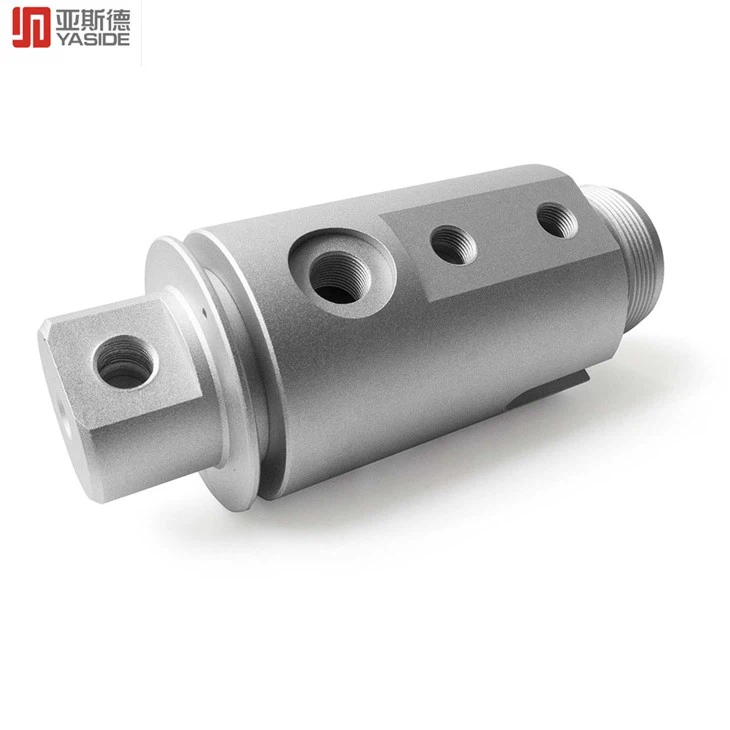
CNC Large Aluminum Machining Parts For Car Aerospace Medical
CNC large aluminum machining parts is amongst the top machining operations in terms of frequency of execution due to the material's remarkable machinability. Manufacturers rely on aluminum CNC machining to make different precision aluminum parts that meet the intended applications' requirements. The process involves using CNC routers to shape aluminum material into preferred shapes and dimensions.

Customized CNC Machining Stainless Steel Flange
Customized CNC machining stainless steel flange refers to the flanges that made of stainless steel. Common material standards and Grades are ASTM A182 Grade F304/L and F316/L, with pressure ratings from Class 150, 300, 600 etc and to 2500. It used in more industries than carbon steel as stainless steel has better resistant performances on corrosion environment and always provides with a good appearance.

Aerospace CNC machining involves using computer-aided tools and components to produce and maintain aircraft and space parts. It is a computerized manufacturing method that moves cutting tools using pre-programmed code and software. Although many industries employ CNC for making parts and products, the aerospace industry is one of the most delicate, with zero margins for error. Also, manufacturers achieve the same outcomes with CNC machines regardless of the quantity produced, whether a single piece or thousands of parts.

CNC machining brass refers to the process of shaping and forming brass materials using Computer Numerical Control (CNC) machines. In this manufacturing technique, computerized systems control the movement of cutting tools and machinery to precisely shape and create intricate components from brass, a metal alloy primarily composed of copper and zinc. CNC machining offers high precision, efficiency, and repeatability in crafting various brass parts for applications across industries such as automotive, electronics, aerospace, and more.

CNC Brass Electrical Component Parts
CNC brass electrical component parts includes Electrical plug sockets, plug pins, switch contacts, HRC fuse components, earthing connectors, wiring terminal connectors, energy meter parts, MCB and ELCB Parts, Holder Plungers and all other electrical brass components. Brass plug socket parts are used in production of electrical plug outlets. Electrical plug outlets are connected with electrical power through brass socket components for providing standard and easy interfacing with electrical equipments. Electrical devices or appliances get power supply through those sockets by means of plug pins or plug tops. This is most common and globally used method for providing electric power supply to electrical equipments.

CNC Milling Components For Various Metals
CNC milling is a machining process that combines computer numerical control machining systems and a multipoint cutting tool or milling cutter. As one type of CNC machining, it involves mounting the workpiece on a machine bed and cutting materials from a solid block to produce products made of glass, metal, plastic, wood and more specialized materials.

CNC Aerospace Spare Parts Machining
Compared with ground movement, flight, as a high-tech and high-risk field, requires highly specialized and rigorous manufacturing standards. During the manufacturing process, many factors must be considered, such as the strength, heat resistance and corrosion resistance of the material, and the impact of the part on aerodynamics must also be considered.

Large Parts Processing For Machines Aircraft
Large CNC machining is a specialized manufacturing process that uses CNC machines to form, cut, mill or drill large, heavy workpieces with high precision. This process is suitable for industries and applications that require the production of very large and complex parts.
Introduction of Electronic Spindle CNC For Metal Stone
Electronic spindle CNC for metal stone integrates the spindle motor and the machine spindle in the field of computer numerical controlled machine tools. Together with high-speed motorized spindles and linear motor technology, it raises high-speed machining to another level. The electric spindle comprises an electric spindle and its accessories: electric spindle, oil mist lubricator, high-frequency inverter, cooling device, tool changer, built-in encoder, etc. With the rapid improvement and growth of electric drive technology (motor vector control technology, frequency control technology, etc.), the structure of the high-speed CNC machine tool's main drive system is greatly simplified, eliminating the gear transmission and belt drive.
Application of Electronic Spindle CNC For Metal Stone
CNC Machine Integration for Soft Materials
In soft materials, there are few limits to cutter speed, however, higher RPM usually requires higher spindle power. For example, machining aircraft aluminum components can benefit when using high speed cutting technology, including superior surface finish and thin walls, if the spindle motor has sufficient rigidity and power to support the resulting high material removal rates.
High Speed CNC Machine Integration for Mold and Die Applications
In mold and die applications, the die cutting speed will be limited based on the cutter material and coatings. So, high speed is typically used for semi-finishing and finishing operations, with a very small contact area during cutting. This process results in an exceptional surface finish that minimizes or eliminates hand finishing, saving time, cost, and optimizing final part accuracy.
High Speed CNC Milling Machine Integration for Micro Drilling Applications
One very popular high speed application is micro-drilling, often required for medical and electronic component parts. A standard machine tool cannot perform this operation in a reasonable time, and often struggles to maintain acceptable quality. An electronic spindle CNC for metal stone, provides exceptional accuracy (less than 1 micron run out), and can perform this operation at a fraction of the time, maintaining the highest level of quality, while extending tool life.
Belt Driven Spindles:
Belt driven spindles are popular for their versatility, allowing for easy adjustment of pulley ratios or the addition of gearboxes to achieve higher torque. They are suitable for speeds up to 8000 rpm, making them a reliable choice for a wide range of applications. However, beyond this speed, noise levels and the risk of belt slippage increase, potentially causing damage to the workpiece, tooling, and spindle itself.
Direct Driven Spindles:
Direct driven spindles eliminate slip between the motor and spindle, resulting in improved surface finishes, reduced noise, and easier maintenance. They are typically used for lighter materials like aluminum and copper and can operate at speeds up to 12000 rpm with minimal issues. However, direct driven spindles have limitations in torque multiplication, and if higher torque is required, motor capacity may need to be increased.
Integrated Spindles:
Integrated spindles, also known as built-in motor spindles, are an excellent choice for applications requiring high speeds and precision. These spindles have the motor and rotor integrated, offering enhanced accuracy and reduced noise levels. They are commonly used in industries such as aerospace, space components, and electronics, where close tolerances and high-speed requirements are critical. Integrated spindles often feature ceramic bearings, further reducing noise and minimizing heat generation.
Components of Electronic Spindle CNC For Metal Stone
Drive System
Whether belt-driven, gear-driven, or an integral motor design, every spindle's drive system is determined by the speed, power, and stiffness required in the application. Belt and gear-driven spindles are typically used when the process requires greater torque and are powered by an external motor and pulley system. A combination of gear sets and pulley ratios are used to increase or decrease torque as needed. Integral motor designs, normally used in higher speed applications, provide torque and power through a system where the stator (a stationary component of an electric induction motor that produces a magnetic field) and rotor (rotational component of an electric induction motor) are located within the spindle housing itself.
Spindle Housing
The spindle housing could be an integral part of the machine, a block style, or a flange-mounted cartridge, among other designs. It provides multiple utility systems to the spindle, such as lubrication channels for the bearings, drilled air passages for positive internal pressure, and cooling jackets to reduce heat. The critical function of the housing, however, is to accurately support the bearing arrangement on the shaft and dampen vibration levels emanating from the machining process.
Bearing System
Depending on the speed, torque, and load requirements, the type of bearing used plays a significant factor in the life of a spindle. For high-speed units, angular contact ball bearings are the standard choice. However, for applications requiring greater stiffness and load capacity, roller bearings provide a higher contact angle and are often the more appropriate option. Lubrication methods, precision levels, preload amount, and overall configuration are determined in accordance with the demands and conditions of the application.
Seals
With external contamination being the leading cause of premature spindle failure, seals are required to prevent swarf and other contaminants from entering the bearings. The two primary types of seals are contact and non-contact. Contact seals are the simplest form, consisting of a lip that sits directly on the surface of the shaft. Lip seals are subject to the rotational forces of the shaft, however, and will inevitably wear down throughout the life of the spindle.
Shaft
The main purpose of the shaft is to transmit torque from the drive system. It is held in place with a series of bearings that allow it to rotate along the centerline of the spindle. A typical spindle shaft is often hollow and tapered at one end to incorporate a tool retention system or draw bar.
Draw bar
The draw bar mechanism rides within the shaft and consists of a rod outfitted with a spring stack to provide the necessary force for clamping and unclamping the tool. The force stems from an actuating cylinder on the back of the draw bar that functions via hydraulic or pneumatic pressure. The front of the draw bar is equipped with a gripper used to clamp the tool and hold it in place while under load.
Top 5 Signs Your Electronic Spindle CNC For Metal Stone Needs Repair
Excessive Noise or Vibration
Excessive noise or vibration from an electronic spindle CNC for metal stone is often an indicator of underlying issues that can compromise the entire machining process. The causes for excessive noise or vibration can be varied, including but not limited to:worn or damaged, bearings, misalignment, spindle or tooling imbalances, drive mechanism issues.
Decline in Spindle Accuracy/Performance
A decline in electronic spindle CNC for metal stone accuracy or performance will manifest as inconsistencies in the dimensions and finish of machined parts, which can compromise the overall quality of the products. Potential causes for this decline include wear and tear of spindle components, loss of spindle stiffness, issues with the spindle motor, or errors in spindle alignment.
Overheating
Overheating is another critical sign you shouldn't ignore. This issue is often caused by inadequate lubrication, which leads to increased friction and heat generation. Another common cause is bearing failure, which can create excess heat due to the increased resistance within the electronic spindle CNC for metal stone mechanism. Improper spindle alignment or an overloaded electronic spindle CNC for metal stone can also lead to overheating.
Chatter or Poor Surface Finish
Chatter or poor surface finish in products can stem from a lack of rigidity in the electronic spindle CNC for metal stone, worn spindle bearings, or imbalances in the spindle assembly. Additionally, incorrect tooling or electronic spindle CNC for metal stone speed settings can add to this problem.
Unusual Power Consumption
Typically, a electronic spindle CNC for metal stone should consume a consistent amount of power relative to its operations. If there's a notable increase in power usage, it could be a sign of underlying issues. Potential causes for this abnormal consumption include spindle misalignment, bearing deterioration, or faults within the drive system.
Electronic Spindle CNC For Metal Stone Maintenance: How to Test a CNC Spindle's Performance
Testing Speed
You won't get the best results with a CNC machine unless the electronic spindle CNC for metal stone is moving at the right speed. If it's too slow, you're not getting the performance that you need. But when the speed is too fast, you risk unnecessary wear and tear, potentially shortening your spindle's life. All you need to do is place the tip of the tachometer on the object being rotated on your CNC machine. The digital sensor in the tachometer will display the correct RPM.
Testing for Runout
Spindle runout occurs when the spindle fails to rotate on its intended axis. This can cause tool chatter and shorten tool life. It also compromises tolerance control and can produce part defects. You can measure circular runout, which is runout at specific cross-sections, and total runout along an entire cylinder. Runout testing can be done either when the tool is running or at rest. Static tests are easier, but dynamic tests provide more accurate measurements. Testing can be performed with a dial test indicator or a non-contact sensor.
Testing Draw bar Force
The correct draw bar force, or tension force, ensures that the interface between the electronic spindle CNC for metal stone and the tool is as rigid as needed. A loose interface can cause tool chatter and unnecessary tool wear, and it can also compromise the part that's being machined, particularly the finish. Draw bar force is tested with a clamp force gauge. The gauge can be hydraulic without batteries, cables, and electronics. If you place the gauge and taper adapter into the spindle taper, you can check whether the draw bar force meets spec in less than a minute.
Testing Spindle Vibration
Machinery in operation sends out vibration signals at different frequencies and with different amplitudes. Excess vibrations, either overall or at a specific frequency, can cause machine wear and defective parts. Electronic spindle CNC for metal stone vibration is generally measured with a ceramic piezoelectric sensor or accelerometer, which converts acceleration to voltage. The type of tool you'll need depends on what type of vibration you're testing for (rotational, lateral, or transverse), the type of sensor range you need, and mounting options on the equipment you'll be testing.
Testing Temperature
Electronic spindles CNC for metal stone get hot during operation, but it's essential that it doesn't overheat. Unchecked temperature can damage or even destroy the CNC machine. Thermal errors also commonly lead to part defects. That's why you need to continually monitor the spindle's temperature. If the machine doesn't have a built-in temperature sensor, the measurement can be done by installing an external sensor, like an FBG sensor.
Testing the Spindle Motor
Electronic spindles CNC for metal stone motors can fail due to excessive vibrations, VFD faults, and issues such as opens or shorts in the windings. Many times, it's not easy to remove the motor and inspect the conditions of the windings. However, you can use a multimeter to check for issues with the spindle motor. You can check for short to ground by disconnecting the motor from its power source and measuring resistance at each wire, including the ground wire. You can also check for opens and shorts by checking wire-to-wire resistance. A reading of zero indicates a short, and a reading over 2 Ohms usually indicates an open.
Testing Solenoid
A solenoid is an electromagnetic coil that converts electricity into movement. In an electronic spindle CNC for metal stone, solenoids operate the valves that control airflow. If air isn't flowing properly, coolant mist can build up and corrode connections. This is a major cause of spindle failure. Solenoid operation can be tested by pulling out the exhaust outlet hose and pressing the manual override button. An unclogged purge of clean air should be exhausted with each button depression.
Our Factory
Our company was established in 1995 and currently has more than 80 employees and a building area of 10,000 square meters.


Ultimate FAQ Guide to Electronic Spindle CNC For Metal Stone
Hot Tags: electronic spindle cnc for metal stone, China electronic spindle cnc for metal stone manufacturers, suppliers, factory, copper cnc machining parts, professional cnc machining, cnc machined o rings, cnc machined rotors, cnc machined connectors, small batch cnc machining parts
You Might Also Like


Send Inquiry