

In the manufacturing industry, precision is often the key to success. When it comes to CNC machining brass parts, one of the most frequently asked questions is whether high precision can be achieved. As a seasoned supplier of CNC Machining Brass Parts, I'm here to delve into this topic and share my insights.
Understanding the Basics of CNC Machining and Brass
CNC (Computer Numerical Control) machining is a manufacturing process in which pre-programmed computer software dictates the movement of factory tools and machinery. This technology allows for the production of highly complex parts with a high degree of accuracy and repeatability. It has revolutionized the manufacturing industry by enabling faster production times, lower costs, and greater precision compared to traditional manual machining methods.

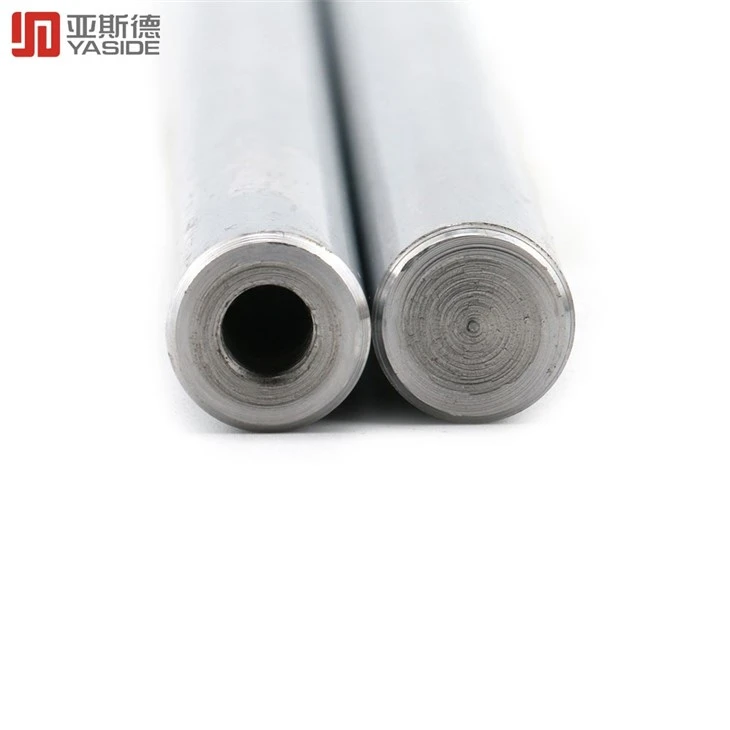
Brass, on the other hand, is an alloy of copper and zinc. It is known for its excellent machinability, corrosion resistance, and aesthetic appeal. These properties make brass a popular choice for a wide range of applications, including electrical components, plumbing fixtures, and decorative items.
Factors Affecting Precision in CNC Machining of Brass Parts
Several factors come into play when determining the precision that can be achieved in CNC machining brass parts.
Machine Capabilities
The quality and capabilities of the CNC machine itself are crucial. High - end CNC machines are equipped with advanced control systems, high - precision motors, and accurate positioning devices. These features allow for extremely fine movements and precise control over the machining process. For example, modern CNC lathes can achieve a positioning accuracy of up to ±0.005mm, which is essential for producing brass parts with tight tolerances.
Tooling
The choice of cutting tools is another important factor. For brass machining, carbide tools are often preferred due to their high hardness and wear resistance. The geometry of the cutting tool, such as the rake angle, clearance angle, and cutting edge radius, also affects the machining precision. A well - designed cutting tool can minimize cutting forces, reduce tool wear, and improve the surface finish of the brass parts.
Workpiece Material
The quality and consistency of the brass material can impact precision. Variations in the composition, hardness, and microstructure of the brass can lead to differences in machining behavior. For instance, if the brass has inclusions or uneven hardness, it may cause the cutting tool to wear unevenly or result in dimensional variations in the machined parts. Therefore, it is essential to source high - quality brass materials from reliable suppliers.
Programming
The CNC program that controls the machining process must be carefully designed. The program should take into account factors such as the cutting speed, feed rate, depth of cut, and tool path. Incorrect programming can lead to over - cutting, under - cutting, or poor surface finish. Skilled programmers use advanced CAD/CAM software to generate accurate tool paths and optimize the machining parameters for each specific brass part.
Achieving High Precision in Practice
At our company, we have extensive experience in CNC machining brass parts to high precision. We follow a strict quality control process to ensure that every part meets the required specifications.
Pre - machining Preparation
Before starting the machining process, we conduct a thorough inspection of the brass material. We check for any visible defects, measure the dimensions, and verify the material properties. We also select the appropriate cutting tools based on the part design and the required precision.
Machining Process
During machining, we use advanced CNC machines with high - precision control systems. We closely monitor the cutting parameters, such as the cutting speed and feed rate, to ensure consistent performance. Our operators are highly trained and experienced, and they are able to make real - time adjustments to the machining process if necessary.
Post - machining Inspection
After machining, we perform a comprehensive inspection of the brass parts. We use a variety of measuring instruments, such as calipers, micrometers, and coordinate measuring machines (CMMs), to check the dimensions, surface finish, and geometric tolerances. Any parts that do not meet the specifications are either re - machined or scrapped.
Applications of High - Precision CNC Machined Brass Parts
High - precision CNC machined brass parts have a wide range of applications.
Electrical and Electronics
In the electrical and electronics industry, brass parts are used in connectors, switches, and terminals. These parts require high precision to ensure proper electrical conductivity and reliable performance. For example, a precisely machined brass connector can provide a tight fit and low resistance, which is essential for efficient power transmission.
Plumbing and HVAC
In plumbing and HVAC systems, brass parts are used in valves, fittings, and pipes. High - precision machining is necessary to ensure a leak - free connection and proper flow control. A well - machined brass valve can open and close smoothly, regulating the flow of water or air accurately.
Automotive
In the automotive industry, brass parts are used in various components, such as fuel injection systems, transmission parts, and electrical connectors. The high precision of these parts is crucial for the overall performance and reliability of the vehicle. For instance, a brass fuel injector nozzle with precise dimensions can ensure accurate fuel delivery, improving engine efficiency and reducing emissions.
Examples of High - Precision CNC Machined Brass Parts
We have successfully produced a variety of high - precision brass parts for different industries.
One example is CNC Machining Helical Gear. Helical gears require precise tooth profiles and accurate pitch to ensure smooth and quiet operation. Our CNC machining process allows us to produce brass helical gears with a high degree of accuracy, meeting the strict requirements of the automotive and machinery industries.
Another example is CNC Linear Motion Shaft Machining Parts. These parts are used in linear motion systems, such as CNC machine tools and robotics. High precision is required to ensure smooth and accurate linear movement. We are able to machine brass linear motion shaft parts with tight tolerances on the diameter, straightness, and surface finish.
We also offer CNC Brass Turned Parts Machining. Our CNC turning process can produce a wide range of brass turned parts, such as bushings, nuts, and bolts, with high precision and excellent surface finish.
Conclusion
In conclusion, CNC machining brass parts can achieve high precision when the right combination of machine capabilities, tooling, workpiece material, and programming is used. At our company, we are committed to providing high - quality, high - precision CNC machined brass parts. Our state - of - the - art equipment, experienced operators, and strict quality control processes ensure that every part meets the highest standards.
If you are in need of high - precision CNC machined brass parts for your project, we invite you to contact us for a consultation. Our team of experts will work closely with you to understand your requirements and provide the best solutions. We look forward to the opportunity to serve you and contribute to the success of your business.
References
- "CNC Machining Handbook" by John Doe
- "Materials Science and Engineering for Manufacturing" by Jane Smith
- Technical papers on brass machining from industry conferences


