


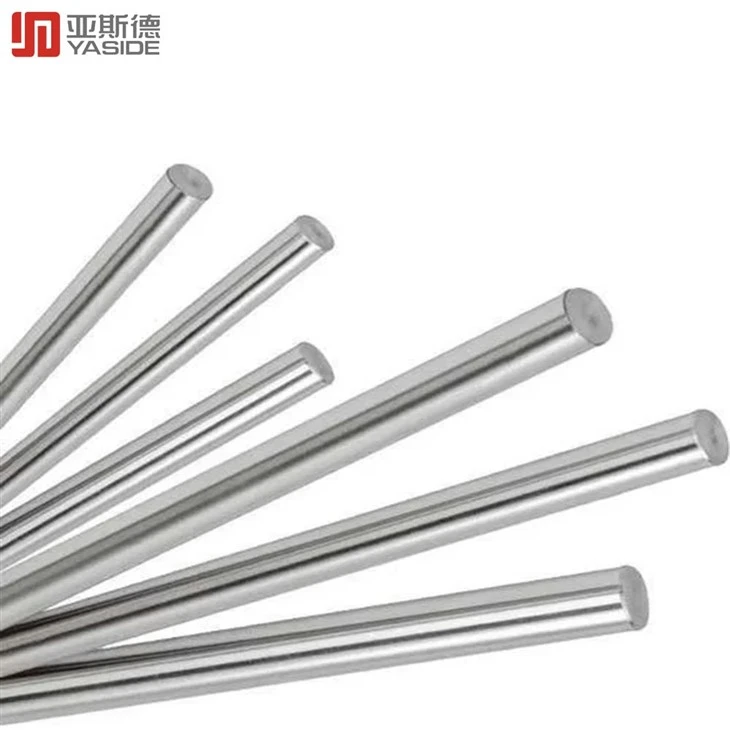

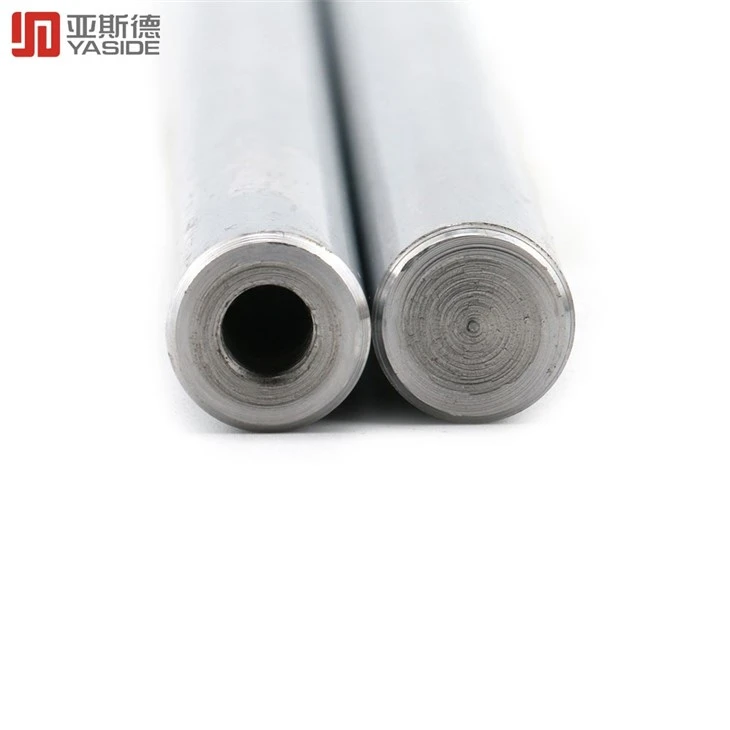

CNC Linear Motion Shaft Machining Parts
Products Description
As specialists in linear motion systems we offer you a choice of materials and sizes. So whether you need lightweight aluminium rails for use in aviation applications or stainless steel components for when exposure to water or corrosive chemicals is a factor, our knowledgeable technical engineers are always on hand to provide assistance.
In linear and sliding motion mechanisms, a linear shaft rod plays a crucial role. Without a linear shaft, we wouldn’t complete a sliding mechanism with linear power transmission.
But, the manufacturing and choosing of the appropriate linear shaft can get tricky. Linear shafts can have different structures and be made of various materials, depending on the properties needed.
In linear power transmission mechanisms, the shaft works together with an actuator, support rail, bushings (ball bearings), etc. In linear power transmission, the actuator typically does all the sliding work, while the rail, bushings, and linear shafts provide support.
Linear shafts have to be mounted before they’re used. There are two main ways of linear shaft mounting – continuous support and end-supported. Linear shafts with continuous support are typically used for heavier loads, while those supported at both ends are used for smaller weight loads.
The majority of linear shafts are made of aluminum, steel alloys, stainless steel, carbon steel, plastics, or other composites.
For instance, stainless steel is often used for applications when the linear shaft must resist rust and corrosion. Another great material for a corrosion-resistant linear shaft is aluminum. On the other hand, you can use alloy steel if your goal is durability, toughness, and stability.
And finally, if you need something more lightweight that uses less energy, you can choose between various composite materials made of bonded carbon fibers. However, these lack the toughness of alloy steel.
It's important to note that linear shafts are usually coated with different materials to improve their hardness or durability. Depending on the requirements and their applications, linear shafts can be hardened with:
Ceramic coating– used to give the linear shaft water-resistant properties;
Chromium coating– for corrosion resistance and decreasing friction;
Anodizing coating– used mainly for hardening aluminum linear shafts;
Black oxide coating– used to give steel or stainless steel linear shafts a superior ion corrosion protection;
That's not an extensive list of coatings. There are many more surface finishers out there, such as electroplating, powder coating, PVD coating, etc.
There are several ways to measure the hardness of linear shafts.
· The Rockwell hardness test presses a steel or diamond cone against a test sample and measures the depth of the resulting indentation. Higher measurements indicate harder materials. For linear shafts, common Rockwell hardness ranges are 50 to 59, 60 to 69, and 70 to 79.
· The Brinell hardness test subjects a test material to a load of 3000 kg with a hardened steel or carbide ball that is 10 mm in diameter.
· The Knoop hardness test also measures a material’s hardness through its resistance to indentation.
· The Vickers hardness test indents a test material with a diamond indenter that is shaped into a right pyramid with a square base and an angle of 136° between opposite faces.
Q: what is the best material for a linear shaft?
Q: How do you spec linear bearings?
Q: what is the purpose of the LM guide?
Q: what is the difference between linear and rotary shaft?
Hot Tags: cnc linear motion shaft machining parts, China cnc linear motion shaft machining parts manufacturers, suppliers, factory, cnc machining for molds, cnc machined keys, cnc machined bearings, cnc machined clamps, cnc machined cylinders, cnc machining for medical devices
You Might Also Like


Send Inquiry