

Hey there! As a supplier of CNC machined metal parts, I've been in the game for quite a while, and I know how crucial dimensional stability is. It's like the backbone of high - quality CNC machined parts. In this blog, I'm gonna share some tips on how to ensure the dimensional stability of CNC machined metal parts.
1. Material Selection
First off, the material you choose is super important. Different metals have different properties, and these properties can greatly affect dimensional stability. For example, metals with low thermal expansion coefficients are generally better for maintaining dimensions. Aluminum is a popular choice in the industry. It's lightweight, has good corrosion resistance, and a relatively low thermal expansion coefficient.
We offer Aluminium CNC Manufacturing Racing Car Parts, and the aluminum we use is carefully selected to ensure that it can withstand the stress and temperature changes during the machining process and in its final application.
Another factor to consider is the material's homogeneity. If the material has internal defects or inconsistent composition, it can lead to uneven deformation during machining. So, we always source our materials from reliable suppliers and conduct strict quality checks before using them in production.
2. Machining Process Optimization
The machining process itself plays a huge role in dimensional stability. One of the key things is to control the cutting parameters. Cutting speed, feed rate, and depth of cut all need to be carefully adjusted. If the cutting speed is too high, it can generate a lot of heat, which may cause the metal to expand and deform. On the other hand, if the feed rate is too low, it can lead to excessive tool wear and inaccurate dimensions.
We also pay close attention to the tool selection. Using the right tool for the job can make a big difference. For example, when machining hard metals, we use carbide tools because they are more wear - resistant and can maintain their cutting edge for longer.
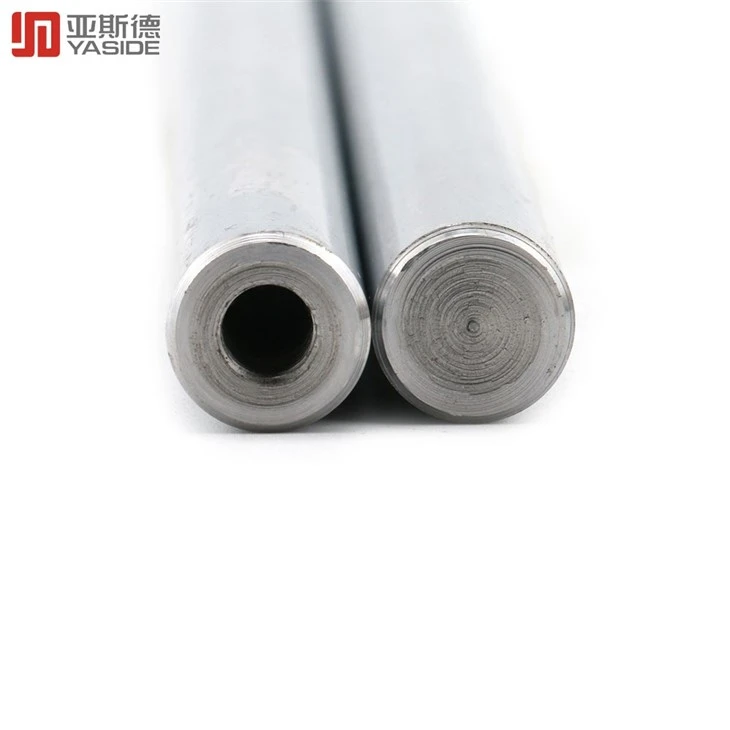
In addition, we use advanced CNC machines that are equipped with high - precision sensors and control systems. These machines can automatically adjust the machining parameters based on real - time feedback, ensuring that the dimensions of the parts are within the required tolerance. For instance, our CNC Linear Motion Shaft Machining Parts are machined with great precision using our state - of - the - art CNC machines.
3. Heat Treatment
Heat treatment is an effective way to improve the dimensional stability of metal parts. By heating and cooling the parts in a controlled manner, we can relieve internal stresses and change the microstructure of the metal. For example, annealing is a common heat treatment process. It involves heating the metal to a specific temperature and then slowly cooling it. This process can reduce the hardness of the metal and relieve internal stresses, making the parts more dimensionally stable.
However, heat treatment needs to be carefully controlled. If the temperature or cooling rate is not right, it can cause distortion or other defects in the parts. That's why we have a team of experienced technicians who are well - versed in heat treatment processes and can ensure that the parts are treated correctly.
4. Post - Machining Inspection and Adjustment
After the machining process is completed, we conduct a thorough inspection of the parts. We use a variety of inspection tools, such as coordinate measuring machines (CMMs), to measure the dimensions of the parts accurately. If any deviations are found, we have a process in place to make adjustments.
Sometimes, we may need to perform secondary machining operations to correct the dimensions. For example, if a part is slightly oversized, we can use a finishing operation to remove a small amount of material and bring it within the required tolerance.
We also keep detailed records of the inspection results for each part. This helps us to analyze the data and identify any trends or issues in the production process. If we notice that a particular type of part is consistently out of tolerance, we can take steps to improve the process, such as adjusting the machining parameters or changing the tool.
5. Storage and Transportation
The way we store and transport the parts also affects their dimensional stability. Metal parts can be affected by environmental factors such as temperature, humidity, and vibration. So, we store our parts in a controlled environment where the temperature and humidity are kept within a certain range.

When transporting the parts, we use proper packaging to protect them from vibration and impact. For our Large Size CNC Machining Milling Turning Parts, we use custom - made crates and padding to ensure that they arrive at our customers' facilities in perfect condition.
6. Employee Training and Quality Culture
Last but not least, our employees are our most valuable asset. We provide regular training to our workers to ensure that they are up - to - date with the latest machining techniques and quality control methods. They are trained to understand the importance of dimensional stability and how their actions can affect it.
We also foster a quality - oriented culture in our company. Everyone from the production line workers to the management is committed to delivering high - quality parts. We encourage our employees to report any potential quality issues immediately so that we can take corrective actions in a timely manner.
In conclusion, ensuring the dimensional stability of CNC machined metal parts is a complex process that involves material selection, machining process optimization, heat treatment, post - machining inspection, storage, transportation, and employee training. By paying attention to every detail in the production process, we can provide our customers with parts that meet their strict dimensional requirements.
If you're in the market for high - quality CNC machined metal parts, we'd love to hear from you. Whether you need CNC Linear Motion Shaft Machining Parts, Aluminium CNC Manufacturing Racing Car Parts, or Large Size CNC Machining Milling Turning Parts, we have the expertise and capabilities to meet your needs. Contact us today to start a discussion about your project!
References
- Groover, M. P. (2010). Fundamentals of Modern Manufacturing: Materials, Processes, and Systems. Wiley.
- Kalpakjian, S., & Schmid, S. R. (2008). Manufacturing Engineering and Technology. Pearson.


