

Selecting the right cutting tools for CNC machining metal gears is a crucial decision that can significantly impact the quality, efficiency, and cost of the manufacturing process. As a supplier of CNC Machining Metal Gears, I have witnessed firsthand the importance of making informed choices when it comes to cutting tools. In this blog post, I will share some insights and guidelines on how to select the right cutting tools for CNC machining metal gears.
Understanding the Basics of CNC Machining Metal Gears
Before delving into the selection of cutting tools, it is essential to have a basic understanding of CNC machining metal gears. CNC (Computer Numerical Control) machining is a manufacturing process that uses pre-programmed computer software to control the movement of machine tools. In the case of metal gears, CNC machining involves cutting, shaping, and finishing the gear teeth to achieve the desired specifications.
The materials commonly used for metal gears include steel, aluminum, brass, and bronze. Each material has its own unique properties, such as hardness, toughness, and machinability, which can affect the choice of cutting tools. Additionally, the type of gear, such as spur gears, helical gears, or bevel gears, also plays a role in determining the appropriate cutting tools.
Factors to Consider When Selecting Cutting Tools
1. Material of the Gear
The material of the gear is one of the most important factors to consider when selecting cutting tools. Different materials require different cutting tool materials and geometries to achieve optimal results. For example, high-speed steel (HSS) cutting tools are suitable for machining softer materials like aluminum and brass, while carbide cutting tools are better suited for harder materials like steel and stainless steel.
Carbide cutting tools offer several advantages over HSS cutting tools, including higher cutting speeds, longer tool life, and better surface finish. However, they are also more expensive. Therefore, it is important to balance the cost of the cutting tools with the requirements of the machining process.
2. Gear Geometry
The geometry of the gear, such as the number of teeth, pitch, and helix angle, also affects the choice of cutting tools. For example, gears with a large number of teeth may require a smaller diameter cutting tool to avoid interference between the tool and the gear teeth. Similarly, gears with a high helix angle may require a specialized cutting tool with a helix angle that matches the gear.
In addition to the gear geometry, the type of gear, such as spur gears, helical gears, or bevel gears, also plays a role in determining the appropriate cutting tools. For example, spur gears can be machined using a variety of cutting tools, including end mills, hob cutters, and gear shapers. Helical gears, on the other hand, require specialized cutting tools, such as helical end mills or hob cutters with a helix angle that matches the gear.
3. Machining Operation
The type of machining operation, such as roughing, finishing, or threading, also affects the choice of cutting tools. Roughing operations typically require a cutting tool with a large cutting edge and a high feed rate to remove material quickly. Finishing operations, on the other hand, require a cutting tool with a small cutting edge and a low feed rate to achieve a smooth surface finish.
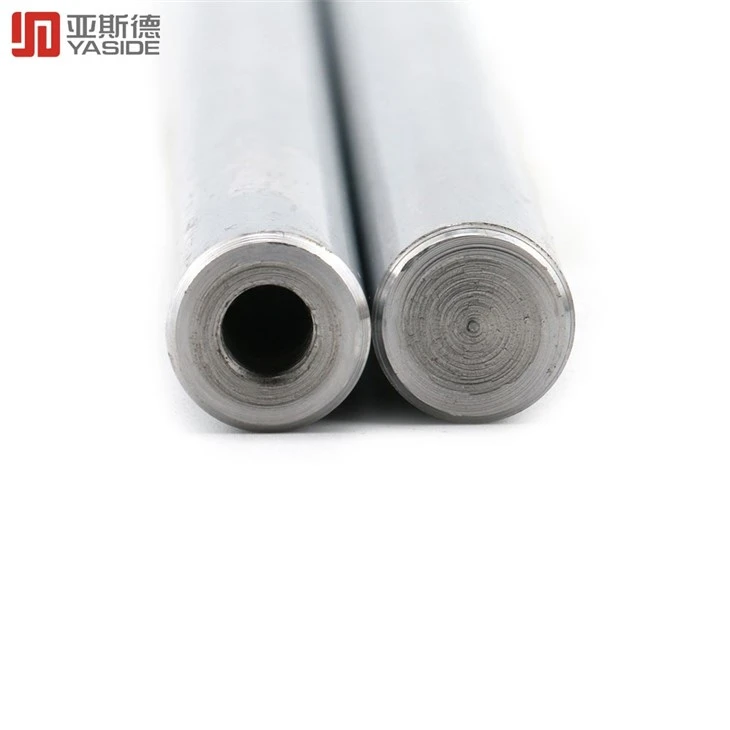
Threading operations require a specialized cutting tool, such as a tap or a die, to create the threads on the gear. The choice of threading tool depends on the type of thread, such as metric or imperial, and the pitch of the thread.
4. Cutting Conditions
The cutting conditions, such as cutting speed, feed rate, and depth of cut, also affect the choice of cutting tools. Cutting speed is the speed at which the cutting tool moves relative to the workpiece, while feed rate is the rate at which the cutting tool advances into the workpiece. Depth of cut is the thickness of the material removed by the cutting tool in each pass.
The cutting conditions should be optimized to achieve the best balance between productivity and tool life. For example, increasing the cutting speed can increase the productivity of the machining process, but it can also reduce the tool life. Therefore, it is important to select the cutting conditions based on the material of the gear, the type of cutting tool, and the machining operation.
Types of Cutting Tools for CNC Machining Metal Gears
1. End Mills
End mills are one of the most commonly used cutting tools for CNC machining metal gears. They are used for a variety of machining operations, including roughing, finishing, and profiling. End mills come in a variety of shapes and sizes, including square end mills, ball end mills, and corner radius end mills.
Square end mills are used for machining flat surfaces and square corners, while ball end mills are used for machining curved surfaces and rounded corners. Corner radius end mills are used for machining corners with a radius.
2. Hob Cutters
Hob cutters are specialized cutting tools used for machining gears. They are used to cut the teeth of the gear by a process called hobbing. Hob cutters come in a variety of shapes and sizes, depending on the type of gear being machined.
Hobbing is a highly efficient and accurate method of machining gears, but it requires a specialized hobbing machine. Therefore, hob cutters are typically used in high-volume production environments.
3. Gear Shapers
Gear shapers are another type of specialized cutting tool used for machining gears. They are used to cut the teeth of the gear by a process called shaping. Gear shapers come in a variety of shapes and sizes, depending on the type of gear being machined.
Shaping is a slower and less efficient method of machining gears than hobbing, but it is more flexible and can be used to machine a wider variety of gear shapes and sizes. Therefore, gear shapers are typically used in low-volume production environments.
4. Threading Tools
Threading tools are specialized cutting tools used for creating threads on the gear. They are used to cut the threads by a process called threading. Threading tools come in a variety of shapes and sizes, depending on the type of thread being machined.
Threading can be done using a variety of methods, including single-point threading, multi-point threading, and tapping. Single-point threading is the most accurate method of threading, but it is also the slowest. Multi-point threading is faster than single-point threading, but it is less accurate. Tapping is the fastest method of threading, but it is also the least accurate.
Conclusion
Selecting the right cutting tools for CNC machining metal gears is a complex decision that requires careful consideration of several factors, including the material of the gear, the gear geometry, the machining operation, and the cutting conditions. By understanding these factors and choosing the appropriate cutting tools, you can achieve optimal results in terms of quality, efficiency, and cost.

As a supplier of CNC Machining Metal Gears, we have extensive experience in selecting the right cutting tools for a variety of applications. We offer a wide range of cutting tools, including end mills, hob cutters, gear shapers, and threading tools, to meet the needs of our customers. If you are interested in learning more about our products and services, please visit our website at [website URL]. You can also explore our other machining capabilities such as CNC Machining Medical Parts, CNC Machining Steel Parts, and CNC Linear Motion Shaft Machining Parts.
We are committed to providing our customers with the highest quality products and services at competitive prices. If you have any questions or would like to discuss your specific requirements, please do not hesitate to contact us. We look forward to working with you to meet your CNC machining needs.
References
- Kalpakjian, S., & Schmid, S. R. (2009). Manufacturing Engineering and Technology (5th ed.). Pearson Prentice Hall.
- Paul, G. (2010). CNC Machining Handbook. Industrial Press.
- Trent, E. M., & Wright, P. K. (2000). Metal Cutting (4th ed.). Butterworth-Heinemann.


