

Hey there! I'm a supplier in the machining stainless steel business, and today I wanna chat about the common machining operations for stainless steel. Stainless steel is a super popular material due to its corrosion resistance, strength, and aesthetic appeal. But machining it can be a bit tricky compared to some other metals. Let's dive into the most common operations.
Turning
Turning is one of the most fundamental machining operations. In turning, a workpiece is rotated while a cutting tool is fed into it to remove material. When it comes to stainless steel, turning can be used to create cylindrical shapes like shafts, pins, and bushings.
The key to successful turning of stainless steel is to use the right cutting tools. High - speed steel (HSS) tools can work, but carbide tools are often a better choice. Carbide tools can withstand the high temperatures generated during the cutting process, which is crucial because stainless steel has a relatively low thermal conductivity. This means that heat tends to build up at the cutting edge, and if the tool can't handle it, it'll wear out quickly.
Also, the cutting parameters need to be carefully adjusted. A lower cutting speed and a higher feed rate are generally recommended. This helps to reduce the heat generation and improve the surface finish of the turned part. For example, if you're turning a stainless steel shaft, you might start with a cutting speed of around 30 - 50 meters per minute and a feed rate of 0.1 - 0.3 mm per revolution.
Milling
Milling is another important operation. It involves using a rotating multi - point cutting tool to remove material from a workpiece. Milling can be used to create flat surfaces, slots, pockets, and complex 3D shapes on stainless steel parts.

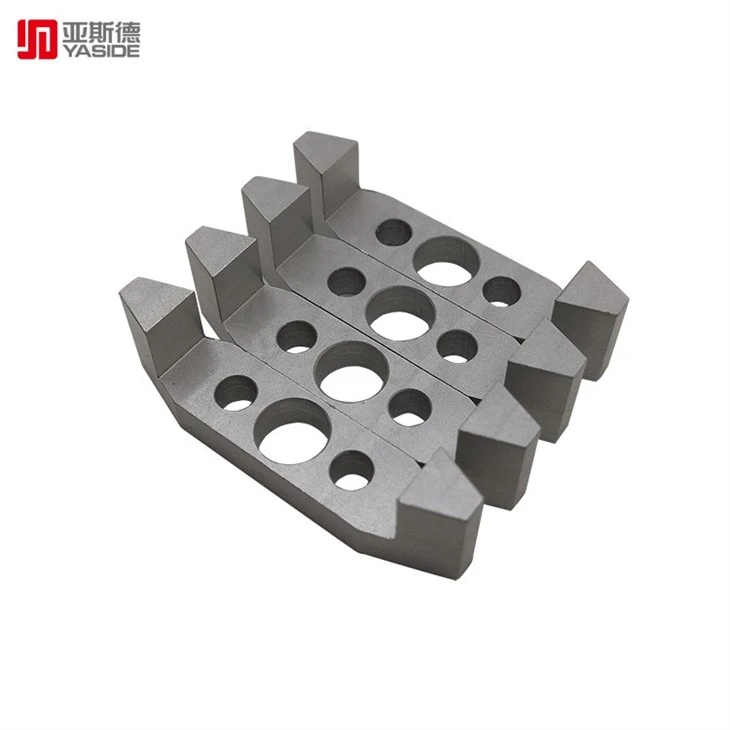
Just like in turning, choosing the right cutting tools is essential for milling stainless steel. End mills made of carbide are commonly used. They come in different geometries, such as square end, ball end, and corner radius end mills, each suitable for different types of milling operations.
When milling stainless steel, coolant is a must. Coolant helps to reduce heat, flush away chips, and prevent the chips from welding to the cutting tool. Flood coolant systems are often used, where a large amount of coolant is sprayed directly onto the cutting area. This keeps the temperature down and extends the tool life.
For example, if you're milling a pocket on a stainless steel plate, you might use a carbide end mill with a diameter of 10 mm. You'd set the spindle speed according to the tool manufacturer's recommendations, usually in the range of 1000 - 3000 RPM, and a feed rate of 100 - 300 mm per minute.
Drilling
Drilling is used to create holes in stainless steel parts. It might seem simple, but drilling stainless steel can be challenging. The material's toughness and work - hardening tendency can cause the drill bit to wear out quickly and make it difficult to get a clean hole.
To drill stainless steel effectively, you need a high - quality drill bit. Cobalt - alloy drill bits are a good option as they have high heat resistance and can maintain their sharpness for longer. Before starting to drill, it's a good idea to center - punch the spot where the hole will be. This helps the drill bit start in the right place and reduces the chances of it wandering.
When drilling, use a slow speed and apply steady pressure. A drill press is often preferred over a hand - held drill for more accurate and consistent results. For example, if you're drilling a 6 mm diameter hole in a stainless steel sheet, you might use a cobalt drill bit and set the drill press speed to around 500 - 800 RPM.
Grinding
Grinding is a finishing operation that can be used to achieve a high - quality surface finish on stainless steel parts. It involves using an abrasive wheel to remove small amounts of material from the workpiece.
There are different types of grinding operations, such as surface grinding, cylindrical grinding, and centerless grinding. Surface grinding is used to create flat and smooth surfaces, while cylindrical grinding is used for round parts.
When grinding stainless steel, the choice of abrasive wheel is crucial. Wheels made of aluminum oxide or silicon carbide can be used, but cubic boron nitride (CBN) wheels are becoming more popular due to their high efficiency and long life. CBN wheels can remove material quickly and produce a better surface finish.
Grinding also requires the use of coolant. Coolant helps to prevent the workpiece from overheating, which could lead to distortion or changes in the material's properties. It also helps to flush away the abrasive particles and chips.
EDM (Electrical Discharge Machining)
EDM is a non - traditional machining process that can be used for stainless steel parts, especially when dealing with complex shapes or hard - to - machine areas. There are two main types of EDM: wire EDM and sinker EDM.
In wire EDM, a thin wire electrode is used to cut through the stainless steel workpiece. The wire is continuously fed through the workpiece while a series of electrical discharges occur between the wire and the workpiece, eroding the material. This process is great for creating precise and intricate shapes, such as dies and molds.
Sinker EDM, on the other hand, uses a shaped electrode to create a cavity in the stainless steel part. The electrode is submerged in a dielectric fluid, and electrical discharges between the electrode and the workpiece remove material.
EDM has some advantages over traditional machining methods. It can machine very hard materials without causing mechanical stress on the workpiece, and it can achieve high precision and a good surface finish. However, it's a relatively slow process and can be more expensive.
Applications and Related Products
Stainless steel parts produced through these machining operations have a wide range of applications. For example, in the automotive industry, stainless steel parts are used in engine components, exhaust systems, and decorative trim. In the medical field, stainless steel is used to make surgical instruments and implants due to its biocompatibility.
If you're interested in other types of machining services, we also offer CNC Processing 6061 Aluminum Parts. Aluminum is a different material from stainless steel, but CNC machining can be used to create high - quality parts from it. We also provide CNC Machining Robot Accessories. These accessories are crucial for the proper functioning of robots and require precise machining. And for those in need of advanced machining equipment, we have Electronic Spindle CNC For Metal Stone, which can enhance the machining capabilities.
Conclusion
In conclusion, machining stainless steel requires a good understanding of the material's properties and the right choice of machining operations and cutting tools. Whether it's turning, milling, drilling, grinding, or using non - traditional methods like EDM, each operation has its own challenges and requirements.
If you're in the market for high - quality machined stainless steel parts, or you have a specific project in mind, don't hesitate to reach out. We're here to help you with all your machining needs. We can work closely with you to understand your requirements, recommend the best machining processes, and deliver parts that meet your exact specifications. So, let's start a conversation and see how we can bring your ideas to life!
References
- "Machining of Metals: An Introduction" by O. P. Pandey
- "Manufacturing Engineering and Technology" by S. Kalpakjian and S. R. Schmid


