

When it comes to brass parts in manufacturing, two primary methods stand out: CNC machining and casting. As a supplier of CNC Machined Brass Parts, I've witnessed firsthand the unique characteristics and applications of each approach. In this blog, I'll delve into the differences between CNC machined brass parts and cast brass parts, helping you understand which option might be best for your specific needs.
Manufacturing Process
The first significant difference lies in the manufacturing process itself. Casting is an age - old method that involves melting brass and pouring it into a mold. The molten brass takes the shape of the mold as it cools and solidifies. This process allows for the creation of complex shapes with relative ease. Patterns can be replicated multiple times, making it suitable for high - volume production of parts with consistent designs.
On the other hand, CNC (Computer Numerical Control) machining is a subtractive manufacturing process. It starts with a solid block of brass. A CNC machine, guided by a computer program, uses various cutting tools to remove material from the block until the desired shape is achieved. This process offers a high degree of precision and can produce parts with tight tolerances.
Precision and Tolerance
CNC machining is renowned for its precision. Modern CNC machines can achieve tolerances as tight as ±0.005mm or even less. This makes it ideal for applications where high precision is crucial, such as in the aerospace, medical, and electronics industries. For example, in the production of Metal Rapid Prototype 4 Axis CNC Machining Milling Parts, the ability to maintain tight tolerances ensures that the parts fit perfectly into the larger assemblies.
Casting, while capable of producing complex shapes, generally has looser tolerances compared to CNC machining. The cooling process in casting can cause shrinkage and other minor deformations, which may require additional finishing operations to meet the required tolerances. However, for applications where extreme precision is not a top priority, such as decorative items or some general - purpose mechanical parts, casting can be a cost - effective solution.
Surface Finish
The surface finish of a part can significantly impact its functionality and aesthetics. CNC machined brass parts typically have a smooth and uniform surface finish. The cutting tools used in CNC machining leave behind fine grooves and a consistent texture. This smooth surface can reduce friction, improve wear resistance, and enhance the overall appearance of the part. It also makes it easier to apply coatings or platings if required.

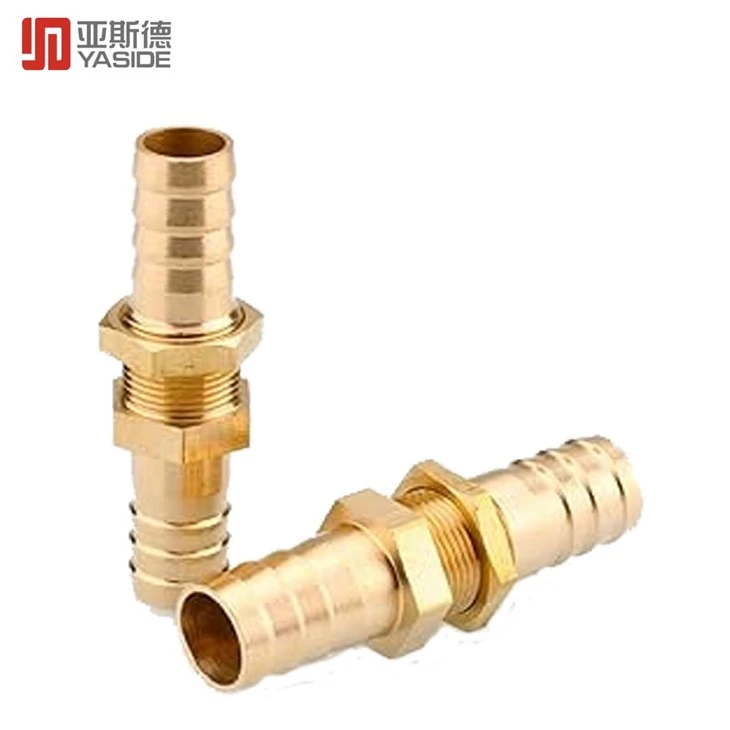
In casting, the surface finish is often rougher. The mold material and the pouring process can leave marks, porosity, or other surface imperfections on the cast part. Post - casting finishing operations, such as grinding, sanding, or polishing, are usually necessary to achieve a satisfactory surface finish. However, even with these additional steps, it can be challenging to match the smoothness and consistency of a CNC machined surface.
Design Flexibility
Casting offers great design flexibility when it comes to creating complex geometries. It can produce parts with internal cavities, undercuts, and intricate shapes that would be difficult or impossible to achieve with CNC machining alone. For example, parts with complex internal channels for fluid flow can be easily cast. This makes casting a popular choice for applications such as plumbing fixtures and some automotive components.
CNC machining, while highly precise, has some limitations in terms of design flexibility. The cutting tools need to have access to the material being removed, which can restrict the creation of certain complex shapes. However, with the advancement of multi - axis CNC machines, the range of achievable designs has expanded significantly. For instance, CNC Machining Robot Accessories often require complex shapes that can now be produced with high precision using modern CNC technology.
Production Volume
The choice between CNC machining and casting can also depend on the production volume. Casting is more suitable for high - volume production. Once the mold is created, it can be used to produce a large number of parts with relatively low per - unit cost. The initial investment in mold making can be high, but this cost is spread over a large number of parts, making it cost - effective in the long run.
CNC machining is more flexible in terms of production volume. It can be used for both low - volume and high - volume production. For low - volume production, there is no need for expensive mold making, which can save a significant amount of money. However, as the production volume increases, the cost per part may become higher compared to casting due to the longer machining times and the cost of cutting tools.
Material Properties
The manufacturing process can also affect the material properties of brass parts. In casting, the rapid cooling of the molten brass can result in a fine - grained microstructure. This can give the cast part good mechanical properties, such as high strength and hardness. However, the presence of porosity in cast parts can sometimes reduce their fatigue resistance.
CNC machined brass parts retain the original material properties of the brass block. Since no melting or significant heat treatment is involved during the machining process, the grain structure of the brass remains relatively unchanged. This can be an advantage in applications where the material's original properties need to be preserved, such as in electrical conductivity - critical applications.
Cost
Cost is a crucial factor in any manufacturing decision. Casting generally has a high upfront cost due to the mold - making process. The cost of designing and fabricating a high - quality mold can be substantial. However, for large - scale production, the per - unit cost can be relatively low.
CNC machining has a lower upfront cost since there is no need for mold making. It is a more cost - effective option for small - to - medium - volume production. However, as mentioned earlier, the cost per part may increase with higher production volumes due to the longer machining times and tool wear. For example, if you are looking for CNC Machining Brass Bulkhead Pipe Fitting in small quantities, CNC machining may be the more economical choice.
Conclusion
In conclusion, both CNC machined brass parts and cast brass parts have their own unique advantages and disadvantages. The choice between the two depends on various factors such as precision requirements, design complexity, production volume, surface finish, and cost. As a supplier of CNC Machined Brass Parts, I can offer high - precision, custom - made parts with excellent surface finishes. Whether you need parts for a high - tech application or a small - scale project, I'm here to provide the best solutions.
If you're interested in learning more about our CNC machined brass parts or would like to discuss your specific requirements, I encourage you to reach out for a procurement discussion. I'm confident that we can work together to find the most suitable brass parts for your needs.
References
- "Manufacturing Engineering & Technology" by Serope Kalpakjian and Steven R. Schmid
- "CNC Machining Handbook" by Mark Albert
- "Casting Processes and Materials" by John Doe


