

Hey there! As a supplier of CNC stainless steel parts, I've had my fair share of experience with different grades of stainless steel in the CNC machining process. Today, I'm gonna break down the differences between machining various grades of stainless steel, so you can have a better understanding of what goes into making those high - quality parts you need.
Let's start with the most commonly used grades: 303, 304, and 316 stainless steel. You can check out some of our CNC Machining 303 304 316 Stainless Steel Parts on our website.
303 Stainless Steel
303 stainless steel is known for its excellent machinability. It contains sulfur, which forms manganese sulfide inclusions. These inclusions act as built - in lubricants during the machining process. When we're using CNC machines to cut, drill, or mill 303 stainless steel, the chips break easily, and the cutting tools experience less wear and tear.
The cutting speeds can be relatively high compared to other grades. This means that we can produce parts faster, which is great for large - volume orders. However, 303 stainless steel isn't the best when it comes to corrosion resistance. It's suitable for applications where corrosion isn't a major concern, like some internal components in machinery.
For example, if you're looking for parts that will be used in a dry, indoor environment, 303 stainless steel could be a great choice. We've used it to make small, intricate parts for electronic devices where the focus is on getting a precise shape quickly.
304 Stainless Steel
304 stainless steel is one of the most popular grades out there. It's a general - purpose stainless steel that offers a good balance between corrosion resistance and machinability. Unlike 303, it doesn't have the sulfur addition for enhanced machinability. So, the chips are a bit more stringy during machining, and the cutting tools need to be more carefully selected.
We usually have to use sharp cutting tools and adjust the cutting parameters a bit more precisely. The cutting speeds are generally lower than those for 303 stainless steel. But the pay - off is its great corrosion resistance. It can withstand mild corrosive environments, like exposure to water or some chemicals.
This makes 304 stainless steel suitable for a wide range of applications. We've made all sorts of parts with it, from kitchenware components to parts for outdoor furniture. If you need a part that will be exposed to the elements but still needs to look good and function well over time, 304 is a solid option.
316 Stainless Steel
316 stainless steel takes corrosion resistance to the next level. It contains molybdenum, which gives it superior resistance to pitting and crevice corrosion, especially in chloride - rich environments. Think of applications near the ocean or in chemical processing plants.
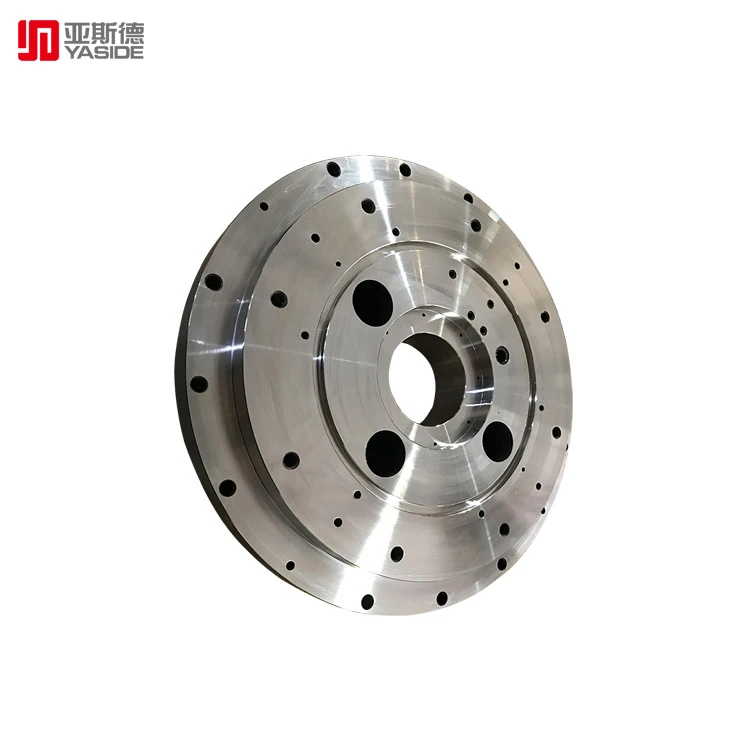

When it comes to CNC machining, 316 stainless steel is a bit more challenging than 304. The molybdenum makes the material harder and tougher. The cutting forces are higher, and the tools wear out faster. We have to use high - quality cutting tools made from materials like carbide and optimize the cutting parameters even more.
The machining process is slower, and the cost of production can be a bit higher. But for applications where corrosion resistance is critical, it's worth it. We've produced parts for marine equipment, like CNC Motorcycle Cylinder Head Processing Parts that will be exposed to saltwater, using 316 stainless steel.
Other Grades
There are also other grades of stainless steel that we deal with in CNC machining. For example, 410 stainless steel is a martensitic stainless steel. It's magnetic and has good strength and hardness. However, its machinability is not as good as 303 or 304. It tends to work - harden during machining, which can cause problems with tool wear and surface finish.
On the other hand, 201 stainless steel is a more affordable alternative. It has lower nickel content compared to 304, which makes it less corrosion - resistant. But it's still suitable for some applications where cost is a major factor and the corrosion environment is mild.
Impact on Surface Finish
The grade of stainless steel also has an impact on the surface finish of the machined parts. 303 stainless steel usually gives a good surface finish due to its easy - to - break chips. The cutting process is smoother, and there are fewer chances of leaving rough edges or burrs.
304 and 316 stainless steel may require additional finishing operations to achieve the same level of smoothness. After the initial CNC machining, we might need to use processes like grinding or polishing. For large parts, we offer Large Workpiece Grinding Machining Parts services to ensure a high - quality surface finish.
Cost Considerations
Cost is always a factor in any procurement decision. 303 stainless steel is generally the most cost - effective when it comes to machining. The fast production times and lower tool wear mean that the overall cost per part can be relatively low.
304 stainless steel is a mid - range option. It's more expensive than 303 but offers better corrosion resistance. 316 stainless steel is the most expensive due to its high corrosion resistance and the challenges associated with machining it.
When you're choosing a grade of stainless steel for your parts, you need to balance the cost with the performance requirements. If you can get away with using 303 for a particular application, it might save you some money. But if corrosion resistance is crucial, investing in 316 could be the right move.
Conclusion
In conclusion, the differences between CNC machining different grades of stainless steel are significant. Each grade has its own unique properties that affect the machining process, the final part quality, and the cost. As a CNC stainless steel supplier, we have the expertise to choose the right grade for your specific needs.
Whether you're looking for parts with high - speed production, excellent corrosion resistance, or a good balance of both, we can help. If you're interested in our products or have any questions about which grade of stainless steel is best for your project, don't hesitate to reach out. We're here to assist you with all your CNC stainless steel part needs. Let's start a conversation about your procurement requirements and see how we can work together to get you the best - quality parts at a competitive price.
References
- ASM Handbook Volume 16: Machining, ASM International
- Stainless Steel World Magazine articles on stainless steel grades and machining


