

Hey there! I'm a supplier of CNC Machining Shafts, and today I wanna chat about the differences between rough and fine grinding in post - CNC shaft finishing. It's a topic that's super important in our line of work, and understanding these differences can really up your game when it comes to getting the best results for your shafts.

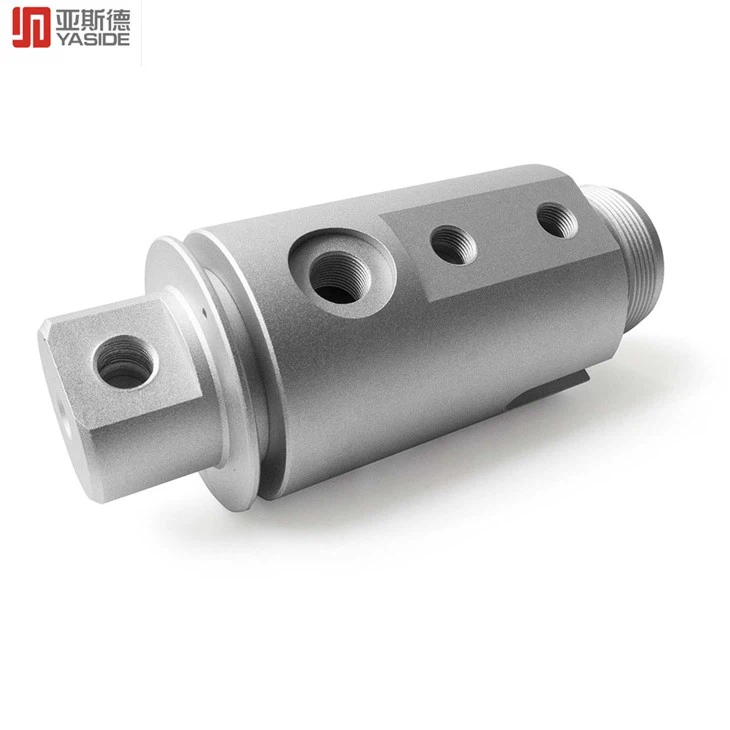
What is Rough Grinding?
First off, let's talk about rough grinding. When we're done with the basic CNC machining of the shaft, rough grinding is often the next step. It's like the initial cleanup after a big project. The main goal of rough grinding is to remove a large amount of material quickly. We're not too worried about getting a super - smooth finish at this stage. Instead, we're focused on getting the shaft close to the desired size and shape.
Rough grinding is usually done with a coarse - grained grinding wheel. These wheels have larger abrasive particles, which means they can cut through the material faster. Think of it like using a big, sharp knife to slice through a thick piece of meat. The larger particles on the grinding wheel bite into the shaft material, removing chunks of it in one go.
One of the advantages of rough grinding is its speed. Since we're removing a lot of material quickly, it saves time in the overall production process. This is especially important when you're dealing with high - volume orders. However, the downside is that the surface finish after rough grinding is pretty rough. There are visible scratches and unevenness on the shaft surface, which isn't suitable for most end - uses.
What is Fine Grinding?
Now, let's move on to fine grinding. After rough grinding has brought the shaft close to the right size, fine grinding takes over. This is the stage where we really start to polish things up. The goal of fine grinding is to achieve a high - quality surface finish, with tight tolerances on the shaft dimensions.
For fine grinding, we use a fine - grained grinding wheel. These wheels have much smaller abrasive particles, which act more like a fine - toothed comb. They gently smooth out the surface of the shaft, removing the scratches left by rough grinding and creating a much more even finish.
Fine grinding is a slower process compared to rough grinding. We have to be more precise and take our time to ensure that the shaft meets the required specifications. But the results are well worth it. The finished shaft has a smooth surface, which is essential for applications where the shaft will be in contact with other parts, like in bearings or gears. A smooth surface reduces friction, wear, and noise, which can significantly improve the performance and lifespan of the machinery.
Key Differences between Rough and Fine Grinding
1. Material Removal Rate
As I mentioned earlier, the material removal rate is a major difference between the two. Rough grinding has a high material removal rate. We can take off a large amount of material in a short period, which is great for quickly shaping the shaft. On the other hand, fine grinding has a very low material removal rate. We're only removing a tiny amount of material at a time to achieve that perfect finish.
2. Surface Finish
The surface finish is where the most obvious difference lies. Rough grinding leaves a rough, uneven surface with visible scratches. Fine grinding, however, produces a smooth, mirror - like finish. This difference in surface finish is crucial because it affects how the shaft will perform in its final application.
3. Grinding Wheel
The type of grinding wheel used is also different. Coarse - grained wheels are used for rough grinding, while fine - grained wheels are used for fine grinding. The choice of grinding wheel depends on the material of the shaft and the desired outcome. For example, if we're working with a hard material like stainless steel, we might need a different type of abrasive for both rough and fine grinding compared to a softer material like aluminum.
4. Precision and Tolerance
Rough grinding is not very precise when it comes to dimensions. We're just getting the shaft in the ballpark of the right size. Fine grinding, on the other hand, is all about precision. We can achieve very tight tolerances, sometimes within a few micrometers. This level of precision is necessary for applications where the shaft needs to fit perfectly with other components.
5. Cost
Cost is another factor to consider. Rough grinding is generally less expensive because it's a faster process and uses less - expensive grinding wheels. Fine grinding, being a slower and more precise process, is more costly. However, the added cost is often justified by the improved quality and performance of the finished shaft.
Applications of Rough and Fine Grinding in CNC Machining Shafts
In our work as a CNC Machining Shaft supplier, we use rough and fine grinding in different applications. For shafts that are used in less - critical applications, like some simple conveyor systems, rough grinding might be sufficient. These shafts don't need a super - smooth surface, and the cost - savings from using rough grinding can be significant.
On the other hand, for high - performance applications such as aerospace or medical equipment, fine grinding is a must. In these industries, the shafts need to have a very smooth surface and precise dimensions to ensure optimal performance and reliability.
Our Services as a CNC Machining Shaft Supplier
As a supplier, we have the expertise and equipment to handle both rough and fine grinding. We understand that different customers have different needs, and we're here to provide the best solution for each project. Whether you need a large - volume order of roughly - ground shafts for a cost - effective solution or a small batch of finely - ground shafts for a high - precision application, we've got you covered.
We also offer related services such as CNC Corrosion Resistant Steel Casting Product Service. This service is great for customers who need shafts that can withstand harsh environments. We can also provide Stainless Steel Bearing Caps Lid For Machinery, which are essential components for many types of machinery. And if you're in the market for CNC Large Aluminum Machining Parts For Car Aerospace Medical, we can produce those as well.
Contact Us for Your CNC Machining Shaft Needs
If you're in the market for high - quality CNC Machining Shafts, don't hesitate to reach out. Whether you have questions about rough and fine grinding, need a quote for your project, or just want to discuss your requirements, we're here to help. We're committed to providing the best products and services to our customers, and we look forward to working with you on your next project.
References
- "Grinding Technology: Theory and Applications of Machining with Abrasives" by Brian R. Marrow
- "CNC Machining Handbook" by Paul A. Koenig


