


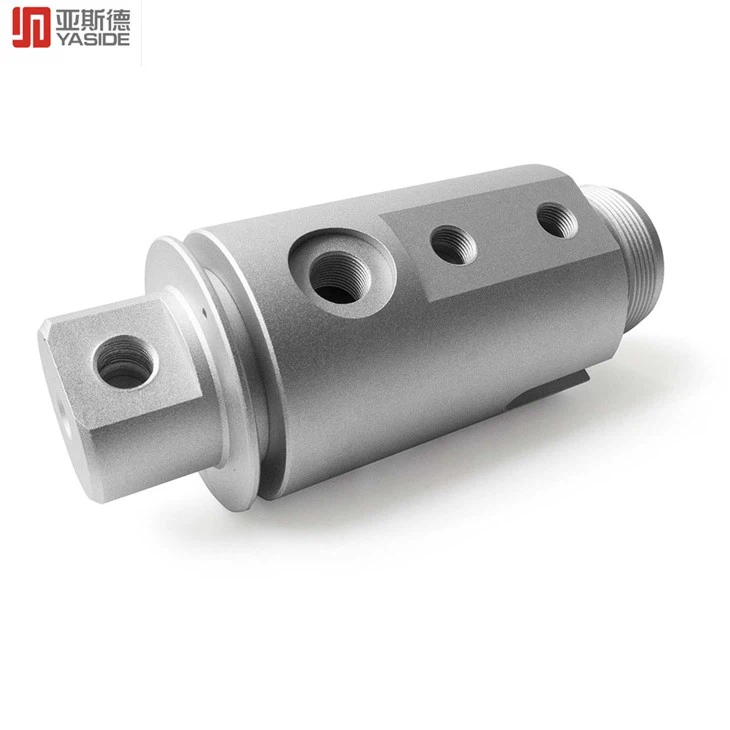
CNC Large Aluminum Machining Parts For Car Aerospace Medical
Your Professional CNC Large Aluminum Machining Parts for Car Aerospace Medical Manufacturer in China!
Dongguan Yasid Precision Machinery Co., Ltd. (formerly Dongguan Jiya Machinery Equipment Co., Ltd.) is a production factory located in Dalingshan Town, Dongguan City, Guangdong Province. Founded in 1995, the company is mainly engaged in the processing of large and precision industrial equipment parts. After 26 years of accumulation and precipitation, our company currently has more than 50 sets of various production equipment [5 sets of CNC horizontal machining centers, 10 sets of CNC vertical machining centers (three-axis, four-axis), 10 sets of CNC lathes, large Surface water mill, internal and external circular mill, gantry milling machine] and complete inspection equipment (altimeter, hardness tester, two-dimensional, three-dimensional, projector, etc.).
Why Choose Us
Quality Assurance
We have large, high-precision trump card equipment, advanced testing equipment and professional quality inspection personnel. We ensure that the quality of each process is effectively controlled, and the product accuracy can reach ±0.005mm.
Professional Team
The company has an entrepreneurial team composed of skilled and high-quality talents. The team leader has been tempered for 28 years, including more than 30 senior engineers and senior technicians.
Rich Experience
As a team that has entered the machining industry for more than 20 years, it has accumulated rich experience in all aspects of the precision machinery industry and formed a scientific management system.
High-Quality Service
We have a professional service team that can answer any questions you have at any time and provide you with professional advice and services.

CNC Machining For Complex Metal Parts
Complex CNC machining refers to the use of computer numerical control (CNC) machines to create complex, intricate, and precise parts and components. In complex CNC machining, the parts being produced typically have complex geometries and may require multiple steps and operations to achieve the desired shape and accuracy. This can involve the use of multiple axes of movement, specialized tooling, and advanced programming techniques.

Aluminum Automobile Car Wheel Hub Components
An aluminum automobile car wheel hub component is a component of a vehicle's wheel assembly that is made by forging aluminum. An aluminum automobile car wheel hub component is typically used in the production of high-performance vehicles, as it is lightweight and has a high strength-to-weight ratio. It can also be used in the production of other types of vehicles, such as passenger cars and trucks, to help reduce weight and improve fuel efficiency.

Customized CNC Machining Stainless Steel Flange
Customized CNC machining stainless steel flange refers to the flanges that made of stainless steel. Common material standards and Grades are ASTM A182 Grade F304/L and F316/L, with pressure ratings from Class 150, 300, 600 etc and to 2500. It used in more industries than carbon steel as stainless steel has better resistant performances on corrosion environment and always provides with a good appearance.

Aerospace CNC machining involves using computer-aided tools and components to produce and maintain aircraft and space parts. It is a computerized manufacturing method that moves cutting tools using pre-programmed code and software. Although many industries employ CNC for making parts and products, the aerospace industry is one of the most delicate, with zero margins for error. Also, manufacturers achieve the same outcomes with CNC machines regardless of the quantity produced, whether a single piece or thousands of parts.

CNC machining brass refers to the process of shaping and forming brass materials using Computer Numerical Control (CNC) machines. In this manufacturing technique, computerized systems control the movement of cutting tools and machinery to precisely shape and create intricate components from brass, a metal alloy primarily composed of copper and zinc. CNC machining offers high precision, efficiency, and repeatability in crafting various brass parts for applications across industries such as automotive, electronics, aerospace, and more.

CNC Brass Electrical Component Parts
CNC brass electrical component parts includes Electrical plug sockets, plug pins, switch contacts, HRC fuse components, earthing connectors, wiring terminal connectors, energy meter parts, MCB and ELCB Parts, Holder Plungers and all other electrical brass components. Brass plug socket parts are used in production of electrical plug outlets. Electrical plug outlets are connected with electrical power through brass socket components for providing standard and easy interfacing with electrical equipments. Electrical devices or appliances get power supply through those sockets by means of plug pins or plug tops. This is most common and globally used method for providing electric power supply to electrical equipments.

CNC Aerospace Spare Parts Machining
Compared with ground movement, flight, as a high-tech and high-risk field, requires highly specialized and rigorous manufacturing standards. During the manufacturing process, many factors must be considered, such as the strength, heat resistance and corrosion resistance of the material, and the impact of the part on aerodynamics must also be considered.

Large Parts Processing For Machines Aircraft
Large CNC machining is a specialized manufacturing process that uses CNC machines to form, cut, mill or drill large, heavy workpieces with high precision. This process is suitable for industries and applications that require the production of very large and complex parts.
Introduction of CNC Large Aluminum Machining Parts For Car Aerospace Medical
CNC machining, an advanced manufacturing process driven by computerized control systems, has revolutionized the production of precision parts across various industries. While numerous materials can be used in CNC machining, aluminum stands out for its exceptional properties, making it a preferred choice for a wide range of applications. CNC large aluminum machining parts are popular because of their lightweight and exquisite appearance, and they are more and more widely used in industry and daily necessities. Especially in recent years, with the development of science and technology and the progress of society, people's demand for product diversity has become stronger and stronger. Therefore, the better the processing technology of CNC large aluminum machining parts, the more popular it will be, the greater the market demand and the higher the profit.
Benefits Of Using CNC Large Aluminum Machining Parts
Machinability
Aluminum is readily formed, worked, and machined using a variety of processes. It can be quickly and easily cut by machine tools because it is soft and it chips easily. It is also less expensive and requires less power to machine than steel. These characteristics are of immense benefits to both the machinist and the customer ordering the part. Furthermore, aluminum's good machinability means it deforms less during machining. This leads to higher accuracy as it allows CNC machines to achieve higher tolerances.
Strength-to-Weight Ratio
Aluminum is about a third of the density of steel. This makes it relatively light. Despite its lightweight, aluminum has very high strength. This combination of strength and light weight is described as the strength-to-weight ratio of materials. CNC large aluminum machining part's high strength-to-weight ratio makes it favorable for parts required in several industries such as the automotive and aerospace industries.
Corrosion Resistance
Aluminum is scratch resistant and corrosion resistant in common marine and atmospheric conditions. You can enhance these properties by anodizing. It's important to note that resistance to corrosion varies in different aluminum grades. The most regularly CNC large aluminum machining parts, however, have the most resistance.
Performance at Low Temperatures
Most materials tend to lose some of their desirable properties at sub-zero temperatures. For example, both carbon steels and rubber become brittle at low temperatures. CNC large aluminum machining parts, in its turn, retains its softness, ductility, and strength at very low temperatures.
Electrical Conductivity
The electrical conductivity of pure aluminum is about 37.7 million siemens per meter at room temperature. Although aluminum alloys may have lower conductivities than pure aluminum, they are conductive enough for their parts to find use in electrical components. On the other hand, CNC large aluminum machining parts would be an unsuitable material if electrical conductivity is not a desirable characteristic of a machined part.
Recyclability
Since it is a subtractive manufacturing process, CNC machining processes generate a large number of chips, which are waste materials. Aluminum is highly recyclable, which means it requires relatively low energy, effort, and cost to recycle. This makes it preferable to those who want to recoup expenditure or reduce material wastage. It also makes CNC large aluminum machining parts a more environmentally-friendly part to machine.
Anodization Potential
Anodization, which is a surface finishing procedure that increases the wear and corrosion resistance of a material, is easy to achieve in aluminum. This process also makes adding color to machined CNC large aluminum machining parts easier.
Applications of CNC Large Aluminum Machining Parts

Aerospace Innovations
CNC large aluminum machining parts are ideal for structural parts like engine components, airframe components, and landing gear in the aerospace industry since aluminum alloys offer good mechanical properties. Aluminum offers excellent strength-to-weight ratio and low weight, making it a widely used material in reducing aircraft weight. CNC large aluminum machining parts helps to meet the stringent quality standards for precision and reliability in the aerospace industry. CNC large aluminum machining parts play pivotal roles in producing aero-structures like wing panels and fuselage sections.

Automotive Engineering
The automotive industry has benefitted immensely from the outstanding properties of aluminum in making different automotive parts and systems. Manufacturers and engineers in the automotive industry use CNC large aluminum machining parts in automotive engineering, most especially in engine components, suspension systems, transmission housing, and electric vehicle components. The lightweight, durability, and strength of aluminum alloys make CNC large aluminum machining parts ideal for reducing overall vehicle weight and ensuring the durability of vehicles.

Consumer Electronics
CNC large aluminum machining parts are widely embraced in producing a broad range of consumer electronics products, including laptops, audio equipment, smartphones and tablets, and camera parts. Aluminum is suitable for making casings of laptops, smartphones, and tablets because it provides a smooth and lightweight design, protecting the internal components of electronic devices. Besides, high-end audio equipment such as amplifiers, headphones, and speaker enclosures often house CNC large aluminum machining parts. Aluminum is commonly used in this application since it can dampen vibrations. Also, CNC large aluminum machining parts offer the desired strength and can dissipate heat in devices like cameras.
What Design Considerations Are Important for CNC Large Aluminum Machining Parts
Consideration 1: Wall Thickness
Maintaining the proper wall thickness is essential for strength and stability because aluminum is a relatively thin material that is prone to warping. Wall thickness plays a crucial role in CNC large aluminum machining parts for several key reasons:
Strength and Stability: Aluminum can bend and warp under stress, especially when it's thin, despite being strong for its weight. It is ensured that the part can withstand the intended load and machining forces without deforming by maintaining the proper wall thickness throughout.
Tool Reach and Accessibility: CNC tools may have trouble reaching and maneuvering through thin walls. With limited clearance, some internal cavities or features may become inaccessible. This can result in incomplete machining or the need for specialized, smaller tools, which can be expensive and ineffective.
Chip Accumulation and Heat Dissipation: Aluminum shavings, or chips, build up around the cutting tool during machining. Thin walls reduce the amount of space available for chip evacuation, which increases the risk of clogging and overheating. This may result in part failure, machining accuracy issues, and tool damage. Furthermore, thin walls have a reduced ability to dissipate heat produced during machining, which raises the possibility of part distortion and tool wear.
Cost and Material Efficiency: More material is needed for thicker walls by nature, but building walls that are too thick also wastes resources and raises production costs. For cost-effective CNC machining, the ideal balance between adequate strength and effective material usage must be found.
Maintaining Design Intent: Overly thin walls may compromise the design intent and necessitate redesign or alternative manufacturing techniques to accommodate essential features like threaded holes or intricate details.
Consideration 2: Features and Tolerances
Design elements that affect cost and viability include undercuts, sharp corners, and tight tolerances, which may call for specialized tools or processes. Let's delve into the reasons:
Machinability: Aluminum has peculiarities despite its versatility. The CNC tools may have difficulty navigating intricate details, thin walls, and sharp corners. Creating features that are simple to machine not only speeds up production but also lowers tool wear and tear, which saves money.
Precision Matters: Even though CNC machines are precision experts, they have their limitations. Miniscule permitted variations in dimensions, or tight tolerances, can be difficult to attain and greatly raise production costs.
Think Assembly: When designing an aluminum part that must work well with others, assembly features must be taken into account. An easy and effective assembly process is ensured by design elements like threaded holes, slots, and interlocking tabs that blend in seamlessly with other parts.
Consideration 3: Draft Angles
Tiny draft angles on vertical features facilitate part removal from the mold and help to keep it from jamming. Draft angles are crucial for CNC large aluminum machining parts for several reasons:
Part Removal: Vertical walls or cavities are a common feature of aluminum parts. In the absence of draft angles, these characteristics would function as hooks, tightly grasping the mold and making it challenging, if not impossible, to remove the completed part without breaking it or the mold.
Reduced Risk of Damage: The force exerted upon extracting a part devoid of draft angles may result in rips, rips, or distortions. This can jeopardize the part's dimensional accuracy and is especially harmful to surface finishes. Draft angles ensure the part maintains its intended form and finish by reducing friction and the resulting damage risk.
Tool Wear and Efficiency: Attempting to extract a jammed part can significantly strain the machining instruments. This quickens the deterioration of tools, raising production costs overall and possibly necessitating tool replacements. By making part removal easier, lessening the strain on the tools, and increasing their lifespan, draft angles help avoid such situations.
Cost-Effectiveness: The budget and deadlines can be greatly affected by production delays resulting from problems with part removal and frequent tool replacements.
Our Factory
Our company was established in 1995 and currently has more than 80 employees and a building area of 10,000 square meters.


Ultimate FAQ Guide to CNC Large Aluminum Machining Parts
Hot Tags: cnc large aluminum machining parts for car aerospace medical, China cnc large aluminum machining parts for car aerospace medical manufacturers, suppliers, factory, cnc milling parts, plastic cnc machining parts, brass cnc machining parts, cnc machining for aerospace, cnc machined components, cnc machining for tooling
You Might Also Like


Send Inquiry