

Hey there! I'm a supplier of CNC machined flanges, and I've been in this business for quite a while. Over the years, I've learned a thing or two about what factors can really affect the quality of these CNC machined flanges. So, let's dive right in and take a look at these key factors.
Material Quality
The first and probably the most important factor is the material quality. You see, the type of material you use for your flanges can make or break the whole deal. Different materials have different properties, and these properties directly impact how well the flange can perform.
For instance, if you're using a low - grade steel, it might not have the right strength or corrosion resistance. On the other hand, using high - quality stainless steel can offer better performance in terms of durability and resistance to harsh environments. We always make sure to source the best materials for our flanged production. It's not just about getting any material; it's about getting the material that suits the specific requirements of the flange. If you're doing a project that requires a flange to be used in a corrosive environment, then you'd want to use materials like Precision Metal CNC Machining Parts, which are made from high - grade alloys that can withstand corrosion.
When we pick materials, we also consider their machinability. Some materials are harder to machine than others. If a material is too hard to cut and shape, it can lead to inaccurate dimensions and a rougher surface finish. So, finding that sweet spot between a material's performance capabilities and its machinability is crucial.
CNC Machine Precision
The precision of the CNC machine itself is another major factor. The CNC machine is the heart of the flange - machining process. If the machine isn't accurate, the flanges it produces won't be either.
Modern CNC machines are pretty advanced, but they still need to be well - maintained and calibrated regularly. Even a small error in the machine's settings can lead to significant deviations in the final product. For example, if the spindle rotation speed is off, it can cause uneven cutting, which means the flange might not have the right diameter or surface finish.
At our place, we invest a lot in top - notch CNC machines. We also have a strict maintenance schedule in place. Our technicians regularly check and calibrate the machines to ensure they're operating at peak precision. This way, we can be sure that every CNC Machined 6061 Aluminum Alloy Brake Parts and other flanges we produce meet the high - quality standards our customers expect.
Cutting Tools
The cutting tools used in the CNC machining process play a vital role too. The quality and condition of these tools can greatly affect the quality of the flanges.
Old or worn - out cutting tools can't make clean cuts. They might leave rough edges, chip the material, or cause burrs on the flange. This not only affects the aesthetic appeal of the flange but also its functionality. For example, burrs can interfere with the proper installation of the flange, causing leaks or reducing its overall strength.
We always keep our cutting tools in top condition. We regularly replace dull or damaged tools. And when we choose cutting tools, we consider factors like the type of material we're machining and the required surface finish. Different materials require different cutting tool geometries and coatings. Using the right cutting tools can significantly improve the quality and efficiency of the machining process, just like when we produce CNC Linear Motion Shaft Machining Parts, where precision cutting is of utmost importance.
Programming and Design
The programming of the CNC machine is also a key factor. A well - designed program can ensure that the machine operates at its best, producing flanges with accurate dimensions and smooth finishes.
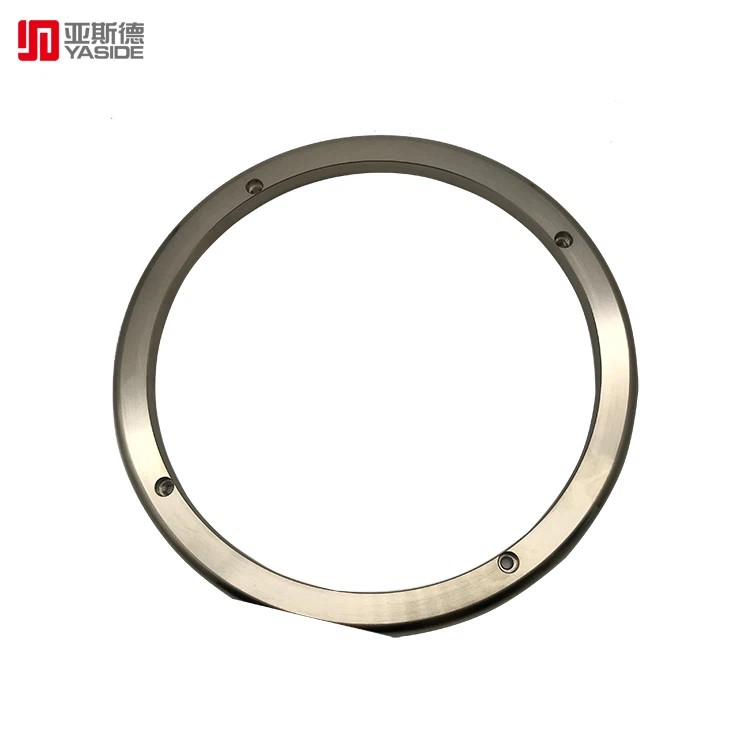

If the program has errors, it can lead to all sorts of problems. For example, incorrect tool paths can cause the machine to cut in the wrong places, resulting in a flange that doesn't meet the specifications. We have a team of experienced programmers who are really good at creating detailed and accurate programs for our CNC machines. They take into account all the factors like the material, the shape of the flange, and the required tolerances when writing the programs.
Moreover, the initial design of the flange is crucial. A poorly designed flange might be difficult to machine, even with the best - programmed CNC machine. The design should be optimized for manufacturability, taking into account factors like the ease of cutting, the ability to hold tolerances, and the overall functionality of the flange.
Operator Skill
The skill and experience of the operator can't be overlooked. Even with the best materials, machines, and programs, an inexperienced operator can still mess things up.
A skilled operator knows how to handle the CNC machine properly. They can make real - time adjustments during the machining process if they notice any issues. For example, if the machine starts to produce a strange noise or if the cutting seems to be off, an experienced operator can quickly identify the problem and take corrective action.
At our company, we provide extensive training to our operators. We want them to be experts in handling the CNC machines and producing high - quality flanges. They also learn about the different materials, cutting tools, and programming techniques so that they can make informed decisions during the production process.
Environmental Factors
Environmental factors can also have an impact on the quality of CNC machined flanges. Temperature and humidity can affect the material and the machine's performance.
For example, extreme temperatures can cause the material to expand or contract. This can lead to dimensional inaccuracies in the flange. High humidity can also cause corrosion on the cutting tools and the machined parts, especially if the material is not properly protected.
We have a controlled environment in our manufacturing facility to minimize the impact of these environmental factors. We keep the temperature and humidity at stable levels to ensure that the machining process is consistent and the final products are of high quality.
Quality Control Measures
Finally, having a strict quality control process in place is essential. We inspect every single flange we produce to make sure it meets our quality standards.
We use a variety of inspection tools, such as calipers, micrometers, and coordinate measuring machines (CMMs). These tools allow us to measure the dimensions of the flange accurately and check for any surface defects. We also have a visual inspection process to look for any obvious signs of damage or poor workmanship.
If a flange doesn't pass our quality control checks, it doesn't leave our facility. We either rework the flange or scrap it to make sure that only the best - quality products reach our customers.
In conclusion, the quality of CNC machined flanges is affected by a wide range of factors, from the material quality to the operator skill and environmental conditions. At our company, we pay close attention to each of these factors to ensure that we provide our customers with the highest - quality flanges.
If you're in the market for high - quality CNC machined flanges or any related products, don't hesitate to get in touch with us. We're always ready to discuss your requirements and provide you with the best solutions for your project.
References
- Smith, J. (2020). CNC Machining Handbook. Publisher Name
- Johnson, R. (2019). Materials and Their Properties in Manufacturing. Another Publisher


