

Hey there! As a supplier of CNC machined metal parts, I often get asked about different properties of these parts. One property that's really important but not always well - understood is the notch toughness of CNC machined metal parts. So, let's dive right in and break it down.
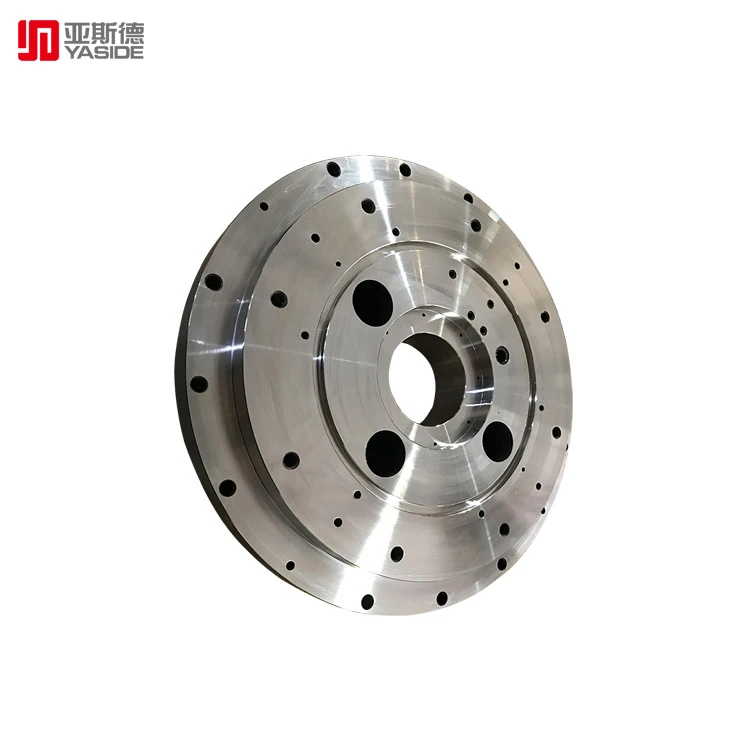

First off, what is notch toughness? In simple terms, notch toughness is a measure of a material's ability to resist fracture when there's a notch or a crack present. You see, in real - world applications, CNC machined metal parts can sometimes have small notches or cracks, either from the machining process itself or due to wear and tear over time. These notches can act as stress concentrators, which means that stress builds up around them. A material with high notch toughness can handle this stress without breaking, while a material with low notch toughness might fracture easily.
Let's talk about why notch toughness matters in CNC machined metal parts. In many industries, like aerospace, automotive, and machinery, these parts are subjected to all sorts of forces. For example, in an aircraft engine, the metal parts have to withstand high - speed vibrations, extreme temperatures, and pressure changes. If a part has low notch toughness, a small notch could quickly turn into a full - blown crack, leading to catastrophic failure. That's a huge no - no, right?
Now, how is notch toughness measured? One common way is through the Charpy impact test. In this test, a sample of the metal with a pre - cut notch is placed in a testing machine. A pendulum is then released, and it strikes the sample at the notch. The energy absorbed by the sample during the impact is measured. The more energy the sample can absorb without breaking, the higher its notch toughness.
There are several factors that can affect the notch toughness of CNC machined metal parts. The first one is the type of metal. Different metals have different inherent notch toughness values. For instance, stainless steels generally have good notch toughness. They're widely used in CNC machining because they can resist corrosion and handle stress well. You can check out our CNC Machining 303 304 316 Stainless Steel Parts for more details on how we machine these tough stainless steel parts.
The heat treatment process also plays a big role. Heat treatment can change the microstructure of the metal, which in turn affects its notch toughness. For example, quenching and tempering can improve the notch toughness of some metals by making the grain structure finer and more uniform. But if the heat treatment is not done correctly, it can actually reduce the notch toughness.
The machining process itself can impact notch toughness. During CNC machining, the cutting tools can create residual stresses in the metal. If these stresses are too high, they can reduce the notch toughness. That's why we pay close attention to the machining parameters, like cutting speed, feed rate, and depth of cut. By optimizing these parameters, we can minimize the residual stresses and maintain good notch toughness in our CNC Machining Metal Precision Parts.
Another factor is the presence of impurities in the metal. Impurities like sulfur, phosphorus, and oxygen can weaken the metal and reduce its notch toughness. That's why we source high - quality raw materials and use advanced refining processes to keep the impurity levels low.
When it comes to choosing the right metal for a CNC machined part based on notch toughness, it depends on the application. For parts that are going to be in high - stress environments, like gears in a heavy - duty transmission, we might choose a metal with very high notch toughness. On the other hand, for less critical parts, a metal with moderate notch toughness might be sufficient.
Let's take a look at some specific examples. In the automotive industry, engine components like crankshafts and connecting rods need to have high notch toughness. These parts are under constant stress and any failure could lead to a breakdown of the engine. We use advanced CNC machining techniques and carefully select the right metals to ensure that these parts meet the high - notch toughness requirements.
In the electronics industry, Electronic Spindle CNC For Metal Stone parts also need to have good notch toughness. These spindles operate at high speeds and need to be reliable. Even a small crack due to low notch toughness could cause the spindle to malfunction, leading to production delays and costly repairs.
As a supplier of CNC machined metal parts, we're committed to providing parts with the right notch toughness for our customers' needs. We have a team of experienced engineers who can analyze the application requirements and recommend the best metal and machining processes. We also have state - of - the - art testing equipment to ensure that the notch toughness of our parts meets the standards.
If you're in the market for CNC machined metal parts and are concerned about notch toughness, don't hesitate to reach out. We can have a detailed discussion about your specific requirements and how we can meet them. Whether it's a small - scale project or a large - scale production run, we're here to help.
In conclusion, notch toughness is a crucial property of CNC machined metal parts. It can make the difference between a reliable part that lasts for years and a part that fails prematurely. By understanding the factors that affect notch toughness and using the right materials and processes, we can ensure that our parts are of the highest quality. So, if you have any questions or need to place an order, just get in touch. We're looking forward to working with you!
References
- Metals Handbook: Properties and Selection: Irons, Steels, and High - Performance Alloys, ASM International
- Manufacturing Engineering and Technology, S. Kalpakjian and S. R. Schmid


