


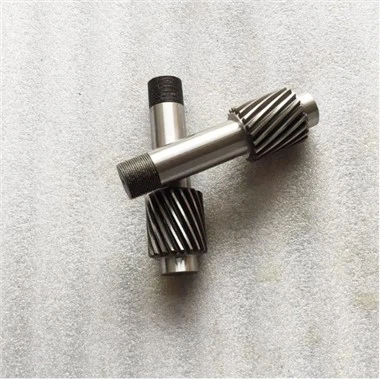
CNC Lathe Stainless Steel Shaft Processing
What is stainless steel?
According to the definition in GB/T20878-2007, stainless steel is a steel whose main characteristics are stainless and corrosion resistance, with a chromium content of at least 10.5% and a carbon content of no more than 1.2%.
Stainless steel is the abbreviation of stainless and acid-resistant steel. The steel grades that are resistant to weak corrosive media such as air, steam, and water, or have stainless properties are called stainless steel; The steel grade is called acid-resistant steel.
Due to the difference in chemical composition of the two, their corrosion resistance is different. Ordinary stainless steel is generally not resistant to chemical medium corrosion, while acid-resistant steel is generally stainless. The term "stainless steel" does not simply refer to one kind of stainless steel, but refers to more than one hundred kinds of industrial stainless steels, and each developed stainless steel has good performance in its specific application field. The key to success is first to understand the purpose, and then to determine the correct steel grade. There are usually only six steel grades relevant to building construction applications. They all contain 17-22% chromium, and the better steel grades also contain nickel. Adding molybdenum can further improve the atmospheric corrosion resistance, especially the resistance to chloride-containing atmosphere corrosion.
Generally speaking, the hardness of stainless steel is higher than that of aluminum alloy, and the cost of stainless steel is higher than that of aluminum alloy.
Lathe processing
1. The preliminary steps of CNC lathe processing first determine the process requirements of the parts, the batch of processed workpieces, and formulate the functions that the CNC lathe should have to prepare for the early stage. The prerequisites for a reasonable selection of CNC lathes meet the process requirements of typical parts. The process requirements of typical parts are mainly It is the structural size, processing range and precision requirements of the part.
2. Select the control accuracy of the CNC lathe according to the accuracy requirements, that is, the dimensional accuracy, positioning accuracy and surface roughness of the workpiece. Choose according to reliability, reliability is the guarantee to improve product quality and production efficiency.
3. The reliability of CNC machine tools means that when the machine tool performs its functions under specified conditions, it can run stably for a long time without failure. That is, the mean time between failures is long, and even if a failure occurs, it can be restored in a short time and put into use again. Choose a machine tool that has a reasonable structure, excellent manufacturing, and has been mass-produced. Generally, the more users, the higher the reliability of the CNC system.
4. The materials processed by CNC lathe are: 304, 316 stainless steel, carbon steel, copper, aluminum, alloy, plastic, POM, etc. However, products of different materials need to use different quality tools to ensure the accuracy required by each product.
Team

Documentary team

Technical team

Inspection team
Team work


FAQ
1. Do you have a quality control department?
Yes, we have 6 QC staff
2. Can you provide material report?
OK.
3. Can you provide test report?
OK.
Hot Tags: cnc lathe stainless steel shaft processing, China cnc lathe stainless steel shaft processing manufacturers, suppliers, factory, cnc lathe spindle manufacturing, stainless steel cnc lathe machining, custom cnc lathe machining, cnc lathe ground parts, cnc lathe sheared parts, cnc lathe nano parts
You Might Also Like




Send Inquiry