


Precision CNC Lathe Metal Parts
Your Professional Precision CNC Lathe Metal Parts for Car Aerospace Medical Manufacturer in China!
Dongguan Yasid Precision Machinery Co., Ltd. (formerly Dongguan Jiya Machinery Equipment Co., Ltd.) is a production factory located in Dalingshan Town, Dongguan City, Guangdong Province. Founded in 1995, the company is mainly engaged in the processing of large and precision industrial equipment parts. After 26 years of accumulation and precipitation, our company currently has more than 50 sets of various production equipment [5 sets of CNC horizontal machining centers, 10 sets of CNC vertical machining centers (three-axis, four-axis), 10 sets of CNC lathes, large Surface water mill, internal and external circular mill, gantry milling machine] and complete inspection equipment (altimeter, hardness tester, two-dimensional, three-dimensional, projector, etc.).
Why Choose Us
Quality Assurance
We have large, high-precision trump card equipment, advanced testing equipment and professional quality inspection personnel. We ensure that the quality of each process is effectively controlled, and the product accuracy can reach ±0.005mm.
Professional Team
The company has an entrepreneurial team composed of skilled and high-quality talents. The team leader has been tempered for 28 years, including more than 30 senior engineers and senior technicians.
Rich Experience
As a team that has entered the machining industry for more than 20 years, it has accumulated rich experience in all aspects of the precision machinery industry and formed a scientific management system.
High-Quality Service
We have a professional service team that can answer any questions you have at any time and provide you with professional advice and services.

CNC Machining For Complex Metal Parts
Complex CNC machining refers to the use of computer numerical control (CNC) machines to create complex, intricate, and precise parts and components. In complex CNC machining, the parts being produced typically have complex geometries and may require multiple steps and operations to achieve the desired shape and accuracy. This can involve the use of multiple axes of movement, specialized tooling, and advanced programming techniques.

Aluminum Automobile Car Wheel Hub Components
An aluminum automobile car wheel hub component is a component of a vehicle's wheel assembly that is made by forging aluminum. An aluminum automobile car wheel hub component is typically used in the production of high-performance vehicles, as it is lightweight and has a high strength-to-weight ratio. It can also be used in the production of other types of vehicles, such as passenger cars and trucks, to help reduce weight and improve fuel efficiency.

Customized CNC Machining Stainless Steel Flange
Customized CNC machining stainless steel flange refers to the flanges that made of stainless steel. Common material standards and Grades are ASTM A182 Grade F304/L and F316/L, with pressure ratings from Class 150, 300, 600 etc and to 2500. It used in more industries than carbon steel as stainless steel has better resistant performances on corrosion environment and always provides with a good appearance.

CNC Machining Brass Bulkhead Pipe Fitting
A CNC machining brass bulkhead pipe fitting is a specialized threaded connector designed to provide a leak-proof and structurally sound passage through a barrier. This barrier can be a wall, tank, reservoir, or any other surface that separates two areas where fluid transfer or containment is necessary. Bulkhead fittings are commonly used in plumbing, piping, industrial processes, automotive applications, and even in aquariums. They can be used with unions or male adaptors. Their left-handed threads help the bulkhead fitting to be intact and tight while installing the male adaptor.

CNC machining brass refers to the process of shaping and forming brass materials using Computer Numerical Control (CNC) machines. In this manufacturing technique, computerized systems control the movement of cutting tools and machinery to precisely shape and create intricate components from brass, a metal alloy primarily composed of copper and zinc. CNC machining offers high precision, efficiency, and repeatability in crafting various brass parts for applications across industries such as automotive, electronics, aerospace, and more.

CNC Brass Electrical Component Parts
CNC brass electrical component parts includes Electrical plug sockets, plug pins, switch contacts, HRC fuse components, earthing connectors, wiring terminal connectors, energy meter parts, MCB and ELCB Parts, Holder Plungers and all other electrical brass components. Brass plug socket parts are used in production of electrical plug outlets. Electrical plug outlets are connected with electrical power through brass socket components for providing standard and easy interfacing with electrical equipments. Electrical devices or appliances get power supply through those sockets by means of plug pins or plug tops. This is most common and globally used method for providing electric power supply to electrical equipments.

Industrial CNC Lathe Machining
Industrial CNC lathe Machining, size Φ190X143Φ65. The smoothness is above 0.4, the vertical concentricity is 0.005, and the general size is 0.005. We can process it. Welcome to consult with pictures.

Precision CNC Turned Components
Precision CNC Turned Components, large and small round parts, smoothness 0.6, dimensional accuracy 0.005, welcome to consult.

Precision CNC Lathe Metal Parts
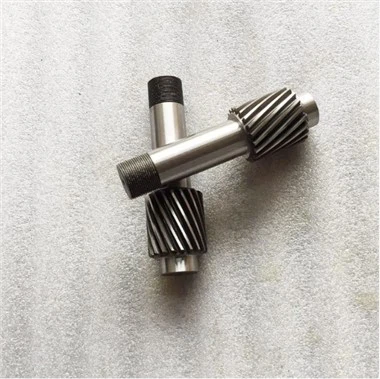
Precision CNC lathe metal parts, precision screw, concentricity 0.01, size φ19.63X77.
Introduction of Precision CNC Lathe Metal Parts
A CNC lathe is mainly composed of: bed, main axis, head, Norton box and tool carriages. The bed is the structure that supports the machine and on which the other parts slide or rest; they are mostly made of cast iron or castings. The main axis is the base that supports the chuck, where the part to be turned is fixed. The heads can be fixed (holding the chuck) or mobile (also called tail stock, they move longitudinally on the bed guides and act as a base to hold the blades that shape the workpiece). The Norton box is made up of gears and levers, and allows the chuck rotation speeds to be adjusted. The carriages are the parts that allow the cutting tool to move, and can move longitudinally or transversally.
Benefits of Precision CNC Lathe Metal Parts
Improved Accuracy and Tighter Tolerance
Precision CNC lathe metal parts can guarantee tight tolerances. Once precise specifications are keyed in, the automated process takes over, ensuring a reduced chance of error, especially when compared to human machining. Demand for complex precision industrial parts is expected to remain strong, and even slight tolerance deviations may result in significant production problems for the end customer and cost increases for the manufacturer.
Increased Efficiency and Faster Production Cycles
Machining tools offer precise solutions at a pace that far outweighs manual production. Another common advantage of opting for precision CNC lathe metal parts is reduced critical errors. Although you might have highly experienced employees operating manual workstations, there is a greater risk of error as far less work is automated.
Versatile and Fully Customizable
The ideal precision CNC lathe metal parts' manufacturer can create nearly any type of part you require to exact specifications at their manufacturing facilities. Manufacturers can make different parts, with varying applications, from various materials. The ideal manufacturer can access and fabricate these with micron-level accuracy through the required processes. Ensure you find a precision CNC lathe metal parts manufacturing company with the equipment and expertise to fashion parts as needed.
Accommodates a Range of Materials
Apart from a range of processing methods, another benefit of using precision CNC lathe metal parts is the ability to work with almost any material. Whether metal or plastic, precision machining equipment can handle it with ease. Regardless of the industry, a proficient manufacturer can match your material specifications so you can maintain quality. Because of the versatility of precision machining, it is suitable for the different requirements and challenges of a wide range of precision CNC lathe metal parts end users and industries.
Mass Production and Repeatability
Two other major benefits of precision parts manufacturing with CNC are that it is a reliable and efficient way to mass-produce consistently high-quality parts. Using precise and automated machinery allows you to produce complex parts that meet standards and specifications quickly and accurately. With increased scalability and repeatability, you gain an advantage in today's competitive market.
Types of Precision CNC Lathe Metal Parts

Headstock
The lathe headstock is the power behind the machine. As one of the most identifiable components of a CNC lathe, the headstock holds the workpiece and keeps it centered on the machine's axis. The dimensions of the headstock will dictate the lathe's "swing." Swing is the maximum diameter of any (pre-machined) workpiece which can fit in the lathe. Though most tasks will not be so large, a machine with a big swing is sometimes very useful.
CNC Lathe Bed
The bed of a lathe is the chassis that holds everything together. It is generally a beam that runs the length of the machine and supports all of the functional subassemblies. The bed must be stiff enough that it does not experience measurable distortion, even under the most extreme usage conditions.
Chuck
The chuck is perhaps the most critical component of a lathe. It clamps the workpiece at the center of rotation and allows easy loading and unloading. The chuck is attached to - but is not part of - the headstock.
Tailstock
The tailstock of a lathe is critical in several tasks. It stands opposite the headstock on the same axis of rotation and can firmly lock onto the workpiece's far end. The extra support can be important to resist significant operating loads. Alternatively, a drill bit may be mounted to the tailstock to drill into the workpiece's rotational axis. Tailstocks generally consist of a Morse taper tool stem holder that sits in a precision feed and allows large force for longitudinal position control.
Tailstock Quill
The quill portion of the tailstock is what grips the Morse taper. It is an externally cylindrical mount that allows chucks, drills, etc to be fitted to the tailstock. The quill is the movable part that can be driven towards the workpiece for drilling or center-stabilization purposes.
Foot Switch or Foot Pedals
Foot switches or foot pedals allow the operator to directly control machine setup or unload functions while their hands are busy in the machine. These pedals can control several functions such as: opening/closing of the chuck (if it is hydraulically or pneumatically operated), positioning of the tailstock (for centering and support setup), and acting as an emergency stop to avoid programming errors and/or accidents.
CNC Control Panel
The operator controls on a CNC lathe typically consist of two parts: the machine panel and the control panel. The machine panel allows the operator to adjust the tool's operational characteristics and cutter position. It is used to manually jog (make small alterations to the position of) the machine's driven axes. The control panel, on the other hand, can be used to enter programs into memory and to edit or alter programs already in memory. This part of the operation is displayed on the integrated screen and shows the G-code being entered or modified.
Tool Turret
The tool turret is the business end of the CNC lathe. Various tools are placed into an operational position and their cutting faces are precisely logged in the machine setup. Each tool in the turret can be rotated one at a time into the cutting position. This feature differs from manual (turret or capstan) lathes in that the tool selection and positioning are performed automatically.
Why Should Maintain Precision CNC Lathe Metal Parts
Elevated Productivity
The heart of any CNC machine shop lies in the productivity of its machine tools. Regular maintenance routines contribute to the optimal functioning of precision CNC lathe metal parts, ensuring they operate at peak efficiency. This, in turn, translates to heightened overall productivity.
Enhanced Profitability
Systematic and timely maintenance rituals serve as a protective shield against machine and production downtimes. By minimizing disruptions, your company can experience a continuous workflow, amplifying overall profitability.
Cost-Effective Approach
Regular maintenance is an investment that pays off in the long run. By preemptively addressing issues during scheduled maintenance, you can avoid unexpected breakdowns that might result in hefty repair costs. This foresighted approach aligns with prudent financial management practices, ensuring operational stability.
Prolonged Machine Lifespan
Treating precision CNC lathe metal parts with consistent care and attention prevents wear and tear and extends their operational lifespan. This strategic longevity can be a pivotal factor in optimizing return on investment by delaying the need for frequent replacements.
Material Wastage Reduction
precision CNC lathe metal parts, when well-maintained, exhibit precision in material processing. This precision directly reduces material wastage, a crucial aspect of cost-effectiveness and sustainability initiatives.
Safety Assurance
Preventing crashes and accidents is a pivotal outcome of regular maintenance. This proactive approach minimizes potential hazards, creating a safer working environment for machine operators. The mitigation of risks aligns with industry standards and safeguards the well-being of your workforce.
Precision CNC Lathe Metal Parts Maintenance Tips
Scheduled Regular Maintenance
Set up a regular maintenance schedule, which includes periodic inspections and preventive maintenance tasks. This will ensure important procedures aren't overlooked.
Daily Visual Inspection
Operators should conduct a daily visual inspection before using the machine. Look for signs of wear, fluid leaks, loose cables, or any other evident issue.
Proper Lubrication
Follow the manufacturer's recommendations for machine lubrication. Ensure all moving parts are adequately lubricated to prevent premature wear.
Regular Cleaning
Keep the workspace and precision CNC lathe metal parts clean. Prevent the buildup of metal chips and dust. Use appropriate cleaning products and methods to remove dirt and residue.
Tool Calibration
Regularly check tool calibration and replace worn or damaged tools promptly. Worn tools can affect machining accuracy.
Vibration Control
Excessive vibrations can damage the machine and affect part quality. Ensure the machine is leveled, and all components are properly tightened.
Temperature Control
Maintain the workshop temperature within the ranges specified by the manufacturer. Extreme temperature fluctuations can affect machine accuracy.
Data and Program Backup
Regularly backup the machine's data and programs. This is vital to avoid losing valuable information in case of technical failures.
Staff Training
Ensure operators are trained in basic maintenance and proper machine operation. Staff knowledge is key to preventing issues.
Preventive Replacement Scheduling
Establish a schedule for the regular replacement of parts with a limited lifespan, such as bearings and belts. This will prevent unexpected failures.
Inspection of Cooling and Filtering Systems
Ensure the cooling and filtering systems are functioning. Inadequate cooling systems can cause machine overheating, while filtering systems prevent particles from entering the machine.
Error and Alarm Monitoring
Pay attention to errors and alarms displayed on the machine. Log and address any issues promptly.
Cutting Tool Maintenance
Keep cutting tools in good condition. Sharpen or replace them as necessary. Worn tools can damage the workpiece and the machine.
Maintenance Record Keeping
Keep a detailed record of all maintenance activities, including dates, tasks performed, and any issues encountered. This makes tracking and future planning easier.
Vibration and Wear Assessment
Conduct regular vibration and wear assessments on the machine. Accurate measurements can reveal budding problems before they turn into major failures.
Our Factory
Our company was established in 1995 and currently has more than 80 employees and a building area of 10,000 square meters.


Ultimate FAQ Guide to Precision CNC Lathe Metal Parts
Hot Tags: precision cnc lathe metal parts, China precision cnc lathe metal parts manufacturers, suppliers, factory, cnc lathe metal processing, custom cnc lathe machining, cnc lathe valve manufacturing, cnc lathe hardened parts, copper cnc lathe machining, cnc lathe quenched parts
Previous
No InformationYou Might Also Like




Send Inquiry